
Workshop Journal · Cooling Havens
One project, three labs – how InnoK's work comes together in Cooling Havens
Seen from the outside, an urban climate adaptation project can easily look like a primarily planning and engineering task. There is a site to be renewed, there are problems to solve, a plan is drawn up, and implementation can begin. The Budapest work of Cooling Havens, however, shows clearly that the reality of urban development is far more complex. Before any decision can be made about which intervention is needed, we have to understand the place itself, the experience of the people who live there, how the area is used day to day, and the environmental problems the development must respond to. Next, we need to examine which of the available solutions can be applied in local conditions, how they can be tested, and how we will be able to tell whether they really work. Finally, the knowledge gained has to be linked to the practical conditions of urban development: maintenance, institutional responsibilities, technical constraints and the next development decisions.
In Cooling Havens, InnoK's three platforms – Civic Lab, Living Lab and Urban Lab – bring together different perspectives on this same process. These are not three isolated areas of work, but a shared way of thinking in which social research, experimentation and urban development constantly feed back into one another. A local experience can become a development question; a development question can become a solution to be tested; testing can produce a measurable result; and that result can become knowledge on which new urban decisions can later be based.
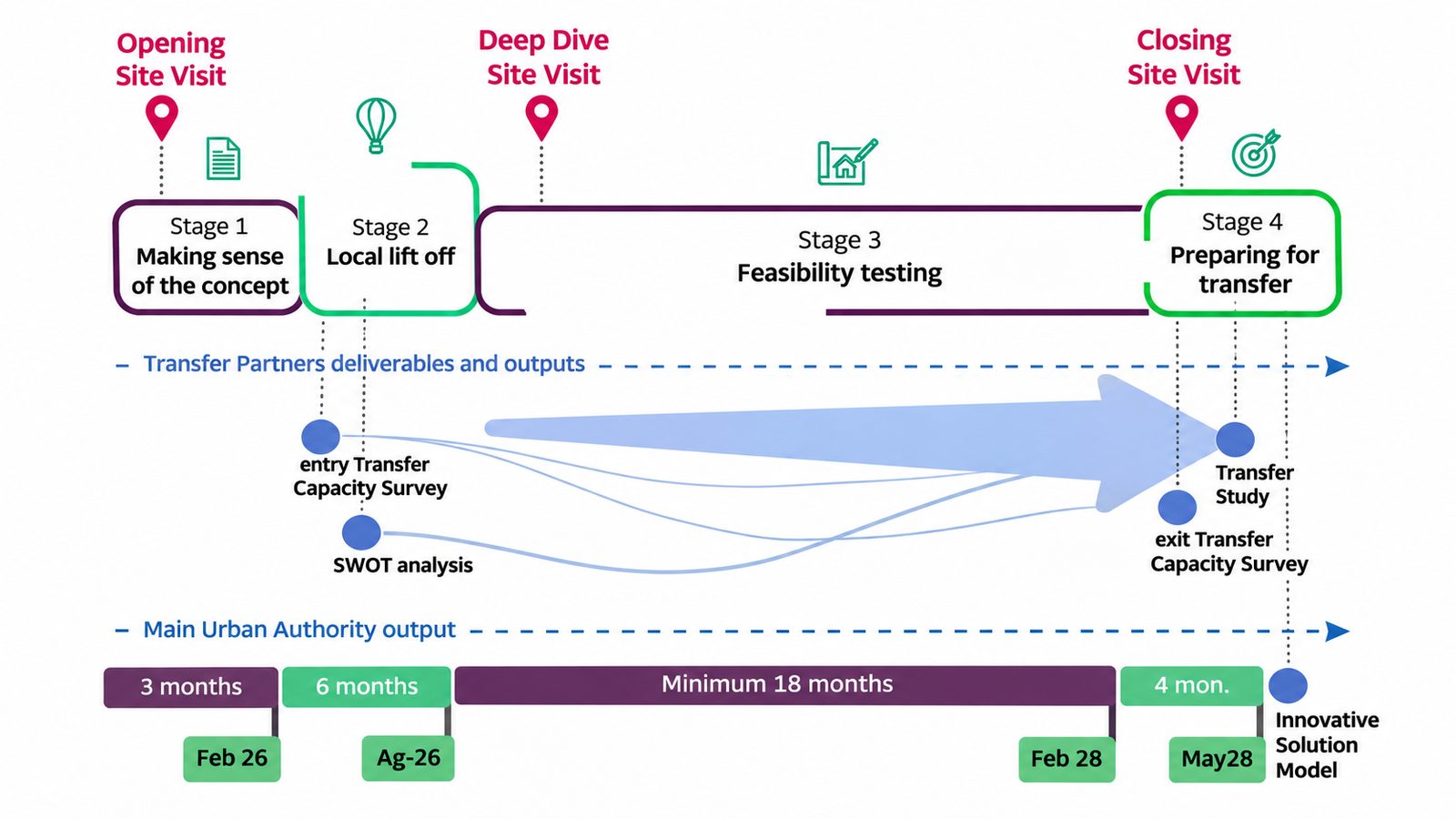
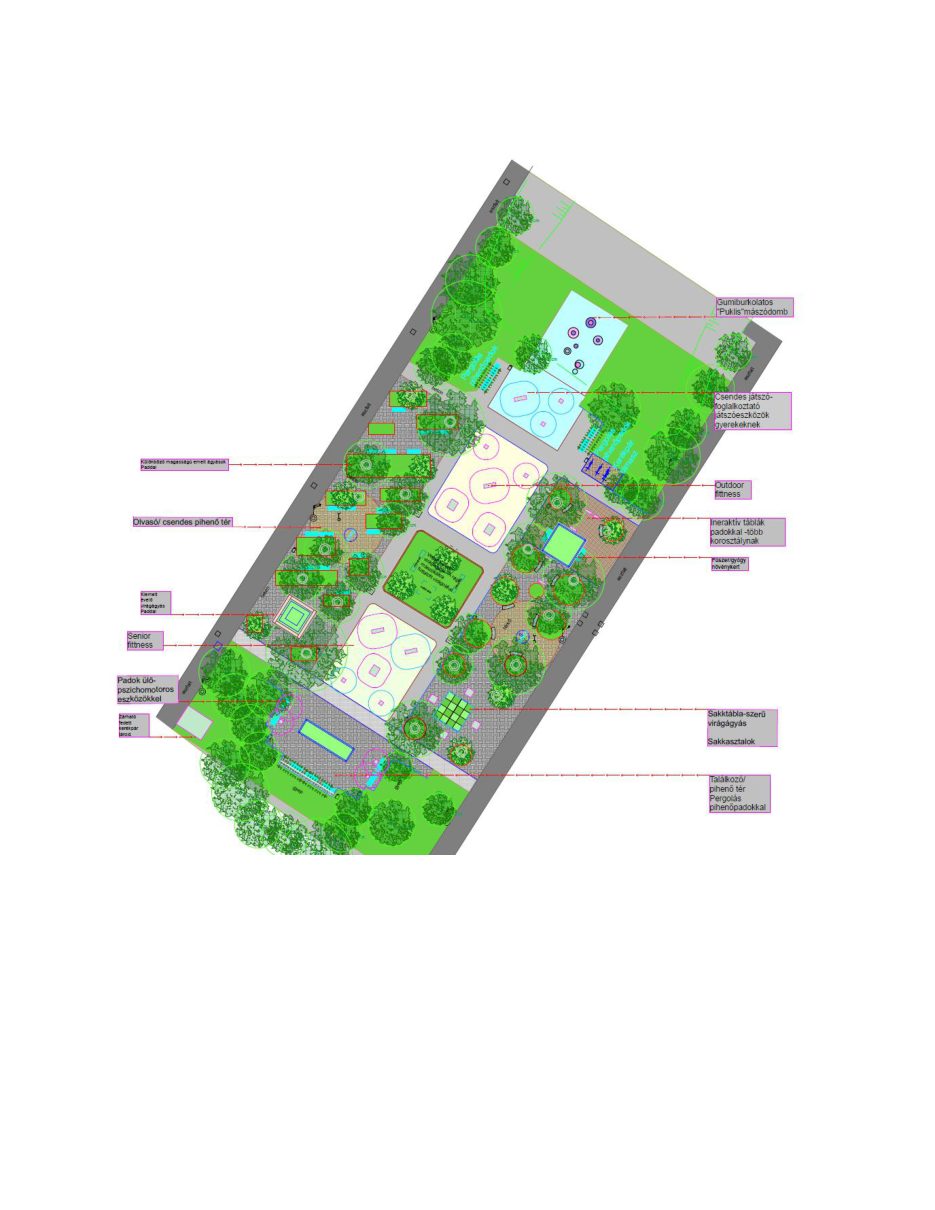
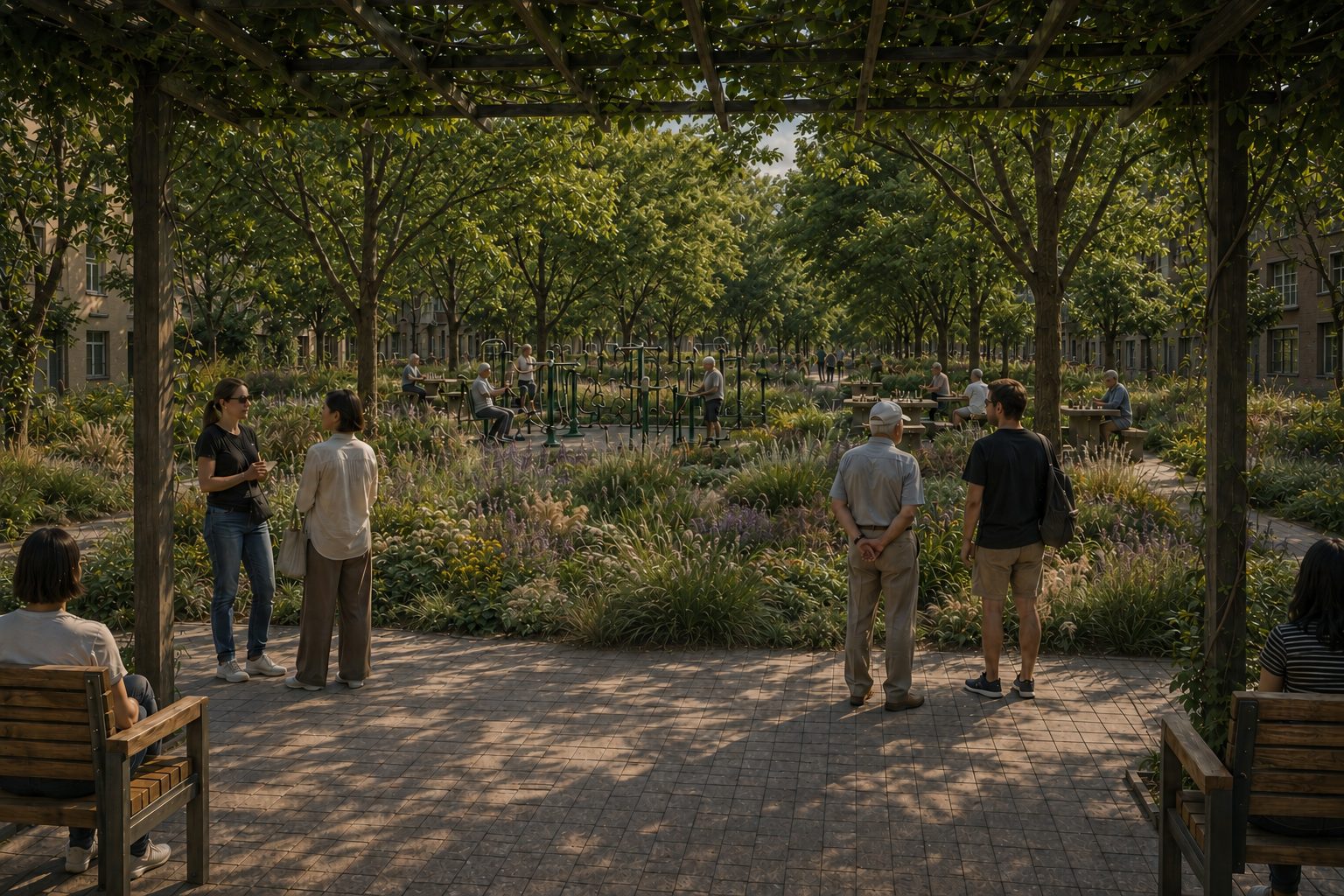
In Budapest, this process becomes tangible on the site between Havanna utca 64–75. The site lies around a former playground that is partly worn out and underused, yet it has considerable potential for green space and community life. Earlier participatory planning had already sketched out a vision in which sport, rest, meeting, small play functions, exercise options for older people and the renewal of green spaces come together in a single shared space. Cooling Havens, then, is not arriving at an empty site. There is already a local story, with earlier decisions, user experience and development ideas to which climate adaptation considerations now need to be connected.
This situation shows why the Civic Lab perspective is important. Before a development, it is not enough to know what is physically on the site. We also need to understand who uses it, how they use it, what problems they perceive, and what change they would regard as a real improvement. Local experience is not simply an opinion to be added to a finished idea at the end of the planning process. It can shape the very first decisions. If, for example, an area functions mainly as a cut-through, different spatial design questions arise than if people stay there for longer periods. If a particular age group hardly uses the place, the reason may be a lack of functions, comfort, accessibility or even a sense of safety. The task of social research is to make these differences visible and to pass them on to the design process in a form from which concrete decisions can follow.
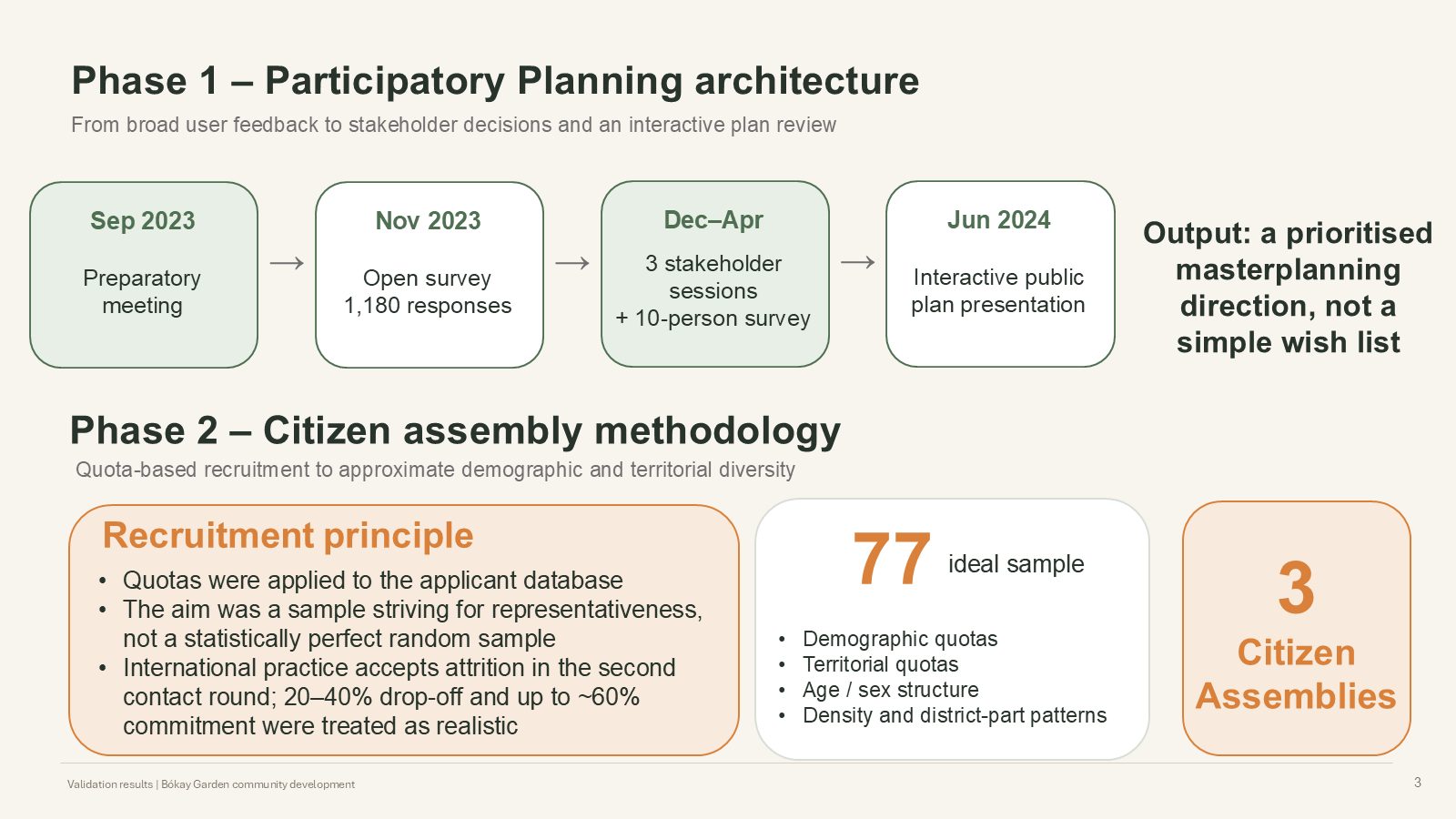
Among InnoK's earlier work, the participatory process for Bókay Garden shows this transition particularly well. There, the decision was not about a single development element but about the long-term future of a large park hosting many different functions. The participatory process therefore consisted of several successive stages. Municipal and operator stakeholders first identified the strategic questions and the values to be preserved; this was followed by a wide-ranging residents' questionnaire, and then professional and landowner consultations refined the considerations that had to be reflected in later design. At the end of the process, the emerging ideas could be shown to users again, so participation served not only to collect problems but also to provide feedback on the design directions.
The residents' questionnaire was completed by 1,180 people in two weeks. The survey was not designed as representative research, so its aim was not to provide a statistical picture of the district's entire population. Even so, it brought a large volume of user experience to light. The responses showed strong demand for reinforcing Bókay Garden's character as an everyday park, increasing the role of green space and water, inclusive playgrounds and better park infrastructure. More than three hundred individual suggestions were submitted, highlighting many everyday issues of use, from sport to drinking fountains and toilets, all the way to resting places and planting.
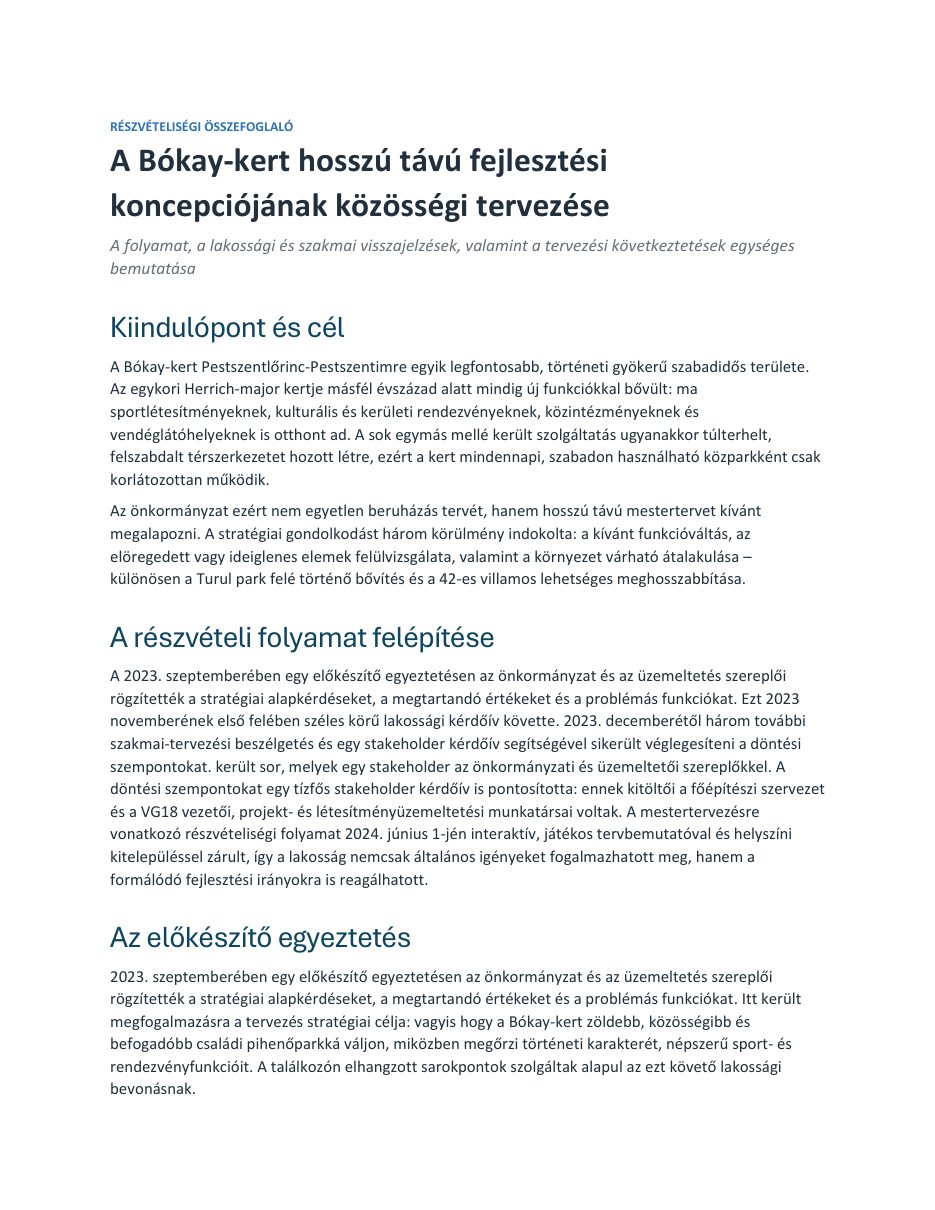
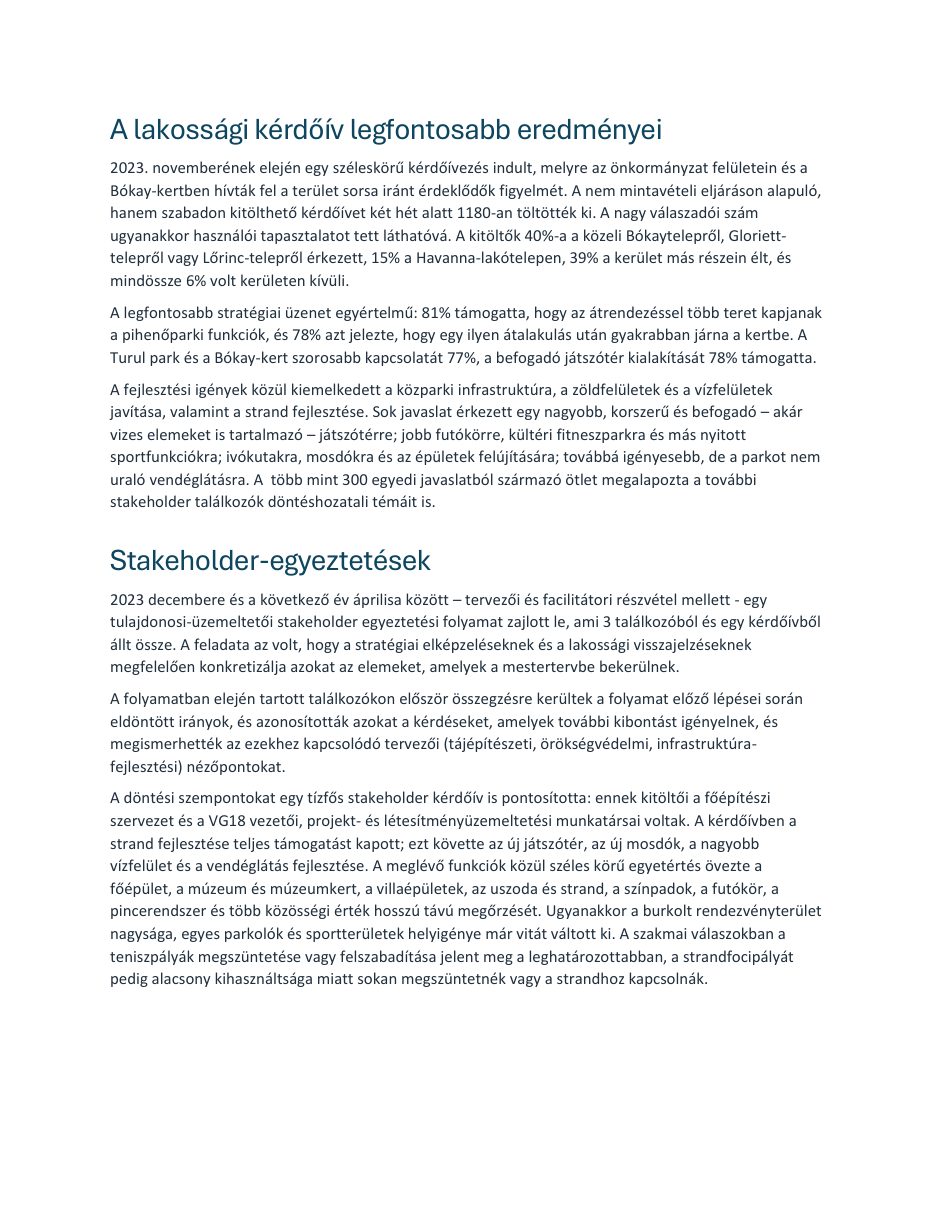
The most important lesson of the Bókay Garden example, however, is that participation did not stop at gathering wishes. In the next phase, the question was how the different needs could be reconciled spatially, financially and operationally. Keeping some functions enjoyed broad support, while the location or space requirements of others prompted debate. In this way, an order of priorities gradually emerged from social feedback. The outcome of the process was a direction for a greener, more inclusive family park for everyday use, in which, alongside events, everyday relaxation, planting, water and the shared presence of different generations are all given prominence.
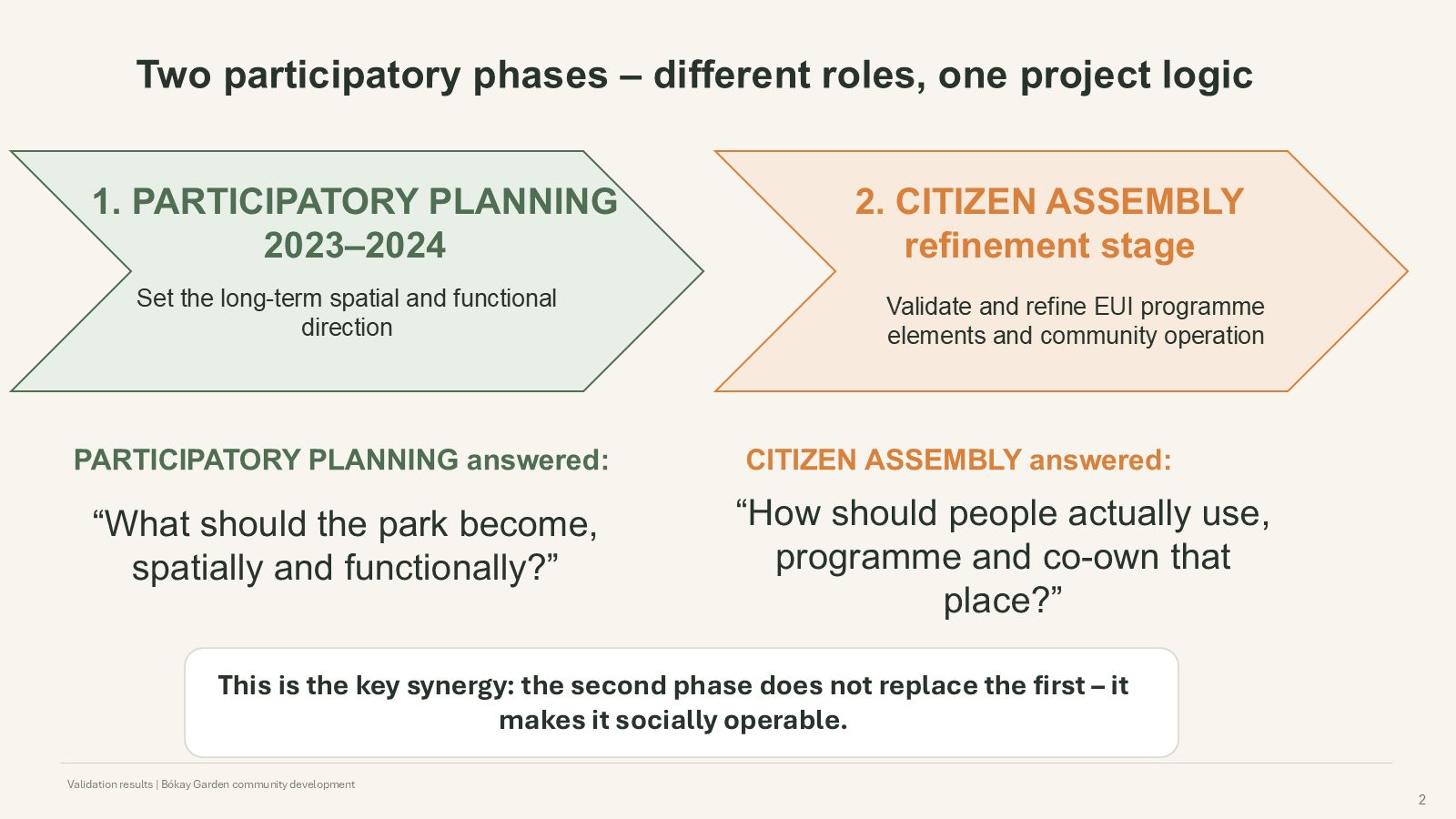
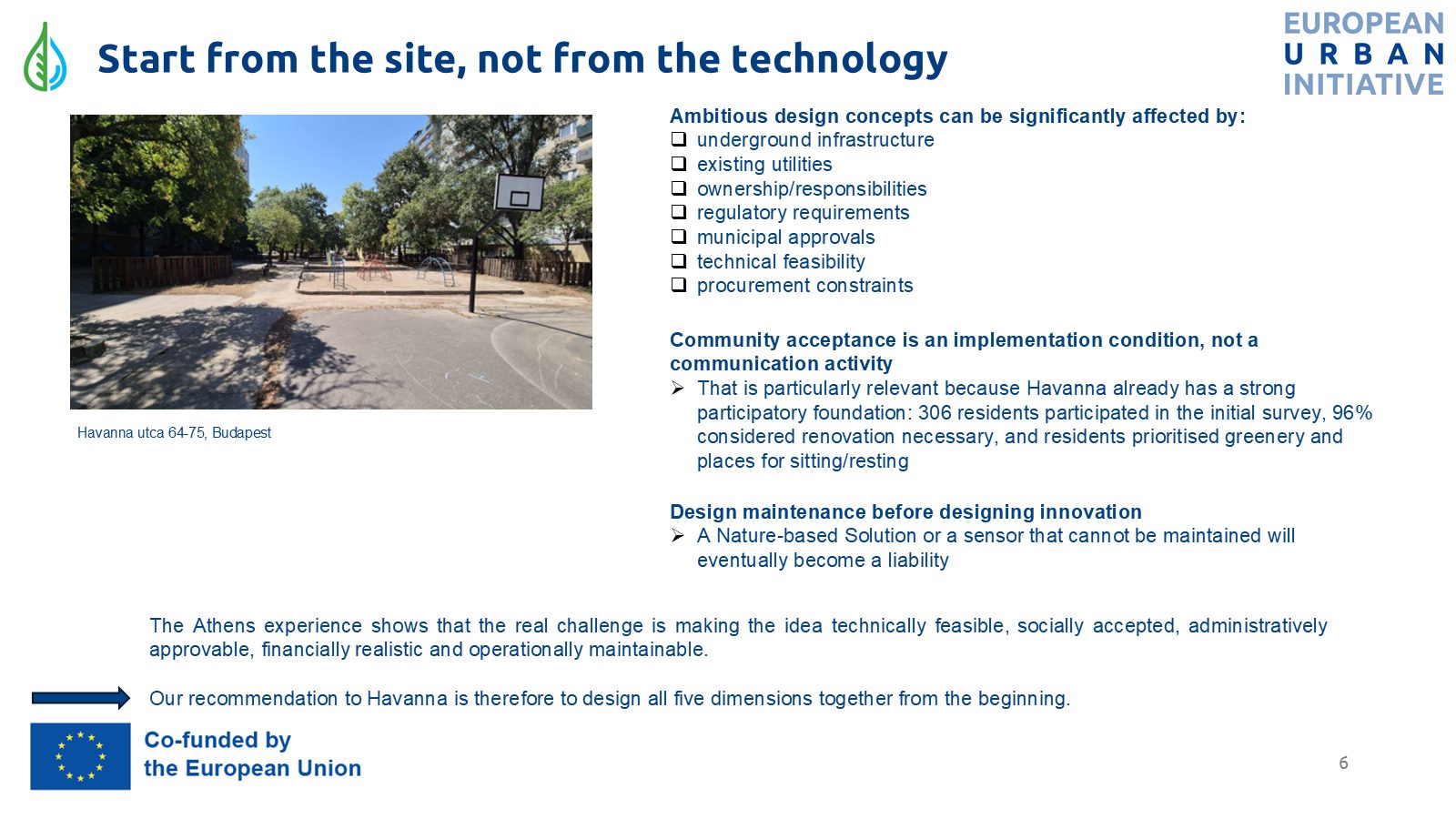
On the Havanna estate, the same thinking leads to a different question. Participatory planning has already set out the main directions for how the space will be used. The next task is therefore not to ask residents all over again what kind of park they want, but to work out how the development concept already taking shape can be taken further from a climate adaptation perspective. What does shade mean in an area used both for passing through and for staying longer? What vegetation can survive here in the long term? How can irrigation be designed so that it uses no more water than necessary? At which points is it justified to measure heat stress, and how will it be possible to compare the performance of the renewed space with its current state?
This is where the role of the Living Lab comes to the fore. For the Living Lab, a good idea is not in itself a result. The idea must give rise to an intervention that can be tested, observed and evaluated on site. The question is not only whether a given solution can be built, but also what we expect of it, and how we will know whether it has met that expectation.
During the Budapest site visit, the shared thinking around Bókay Garden illustrated this approach well. The partners talked about greening, water retention, community use, smart irrigation, sensors and maintenance all at once. These were not independent ideas. They were parts of a system in which environmental performance and usability cannot be separated.
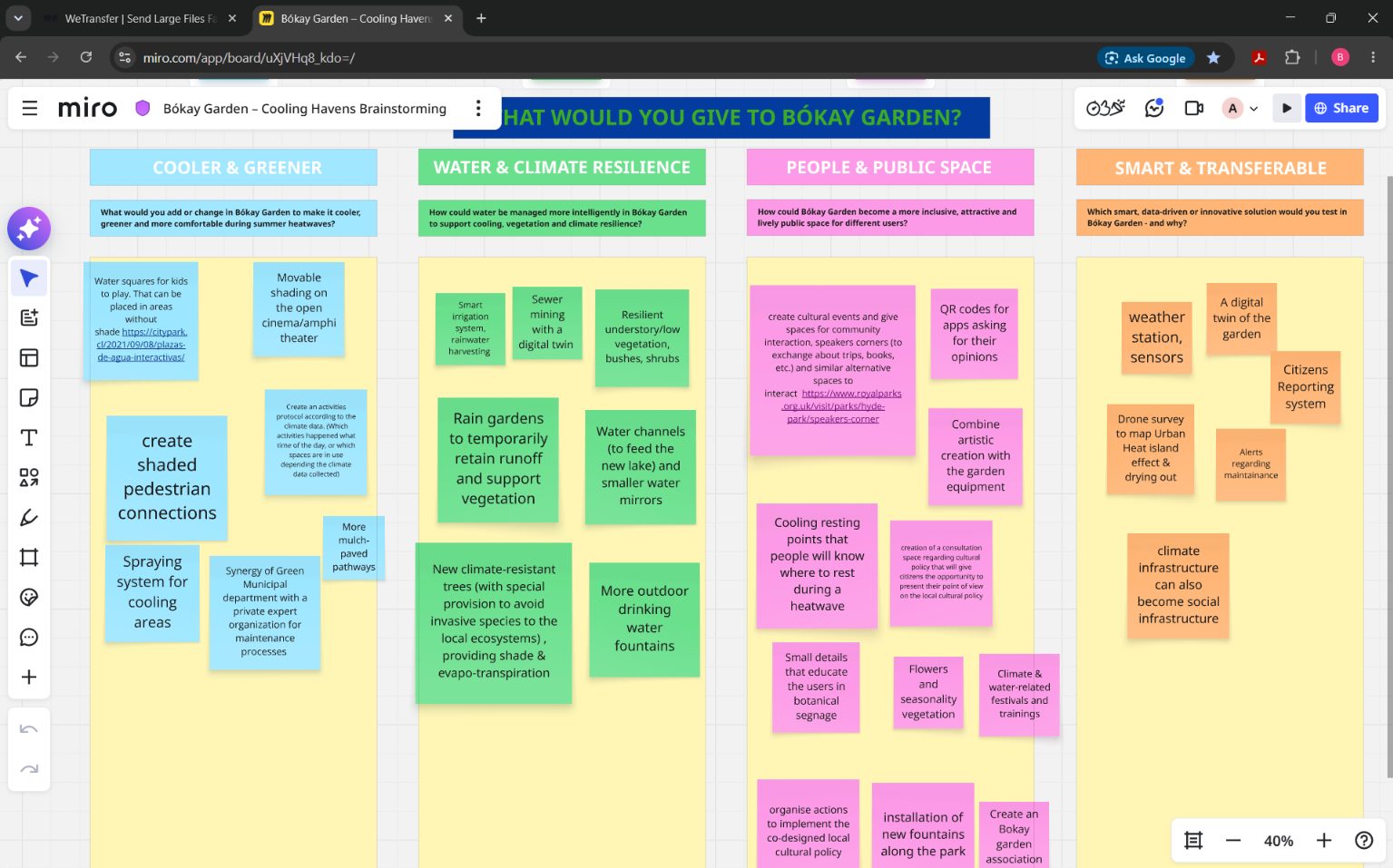
Another important layer of the Living Lab's work is the local interpretation of the Athens experience. Through the international collaboration in Cooling Havens, we have become familiar with a range of nature-based and data-driven solutions used in Athens to reduce urban heat stress, manage water and make public spaces more usable. Rain gardens, more diverse planting, smart irrigation, environmental monitoring and digital evaluation are all part of this professional toolkit. Knowledge transfer, however, does not mean adopting these solutions unchanged.
There are similarities between the problems of Athens and Budapest, but the local context differs. The climate, the annual distribution of rainfall, the soil, the vegetation, the utility network, and the institutional and maintenance background are all different. The Living Lab therefore starts from the question rather than the technology. First we need to understand what problem we want to solve; only then can we decide which solution fits it.
The same logic shapes the preparation of measurement. If the aim of the pilot is to improve thermal comfort, the current situation must be known before the development, so that it can later be compared with the new state. If we want to know how effective smart irrigation is, we need data that make soil conditions and water use interpretable. And if we want to know whether a better community space has been created, we also need to look at people's presence, how long they stay and what they experience.
One of the most important professional messages from the Athens monitoring experience is that a sensor is not placed in a public space for its own sake. Every measurement must answer a question. The data collected by an instrument are only valuable if they mean something for operation or for the next design decision.
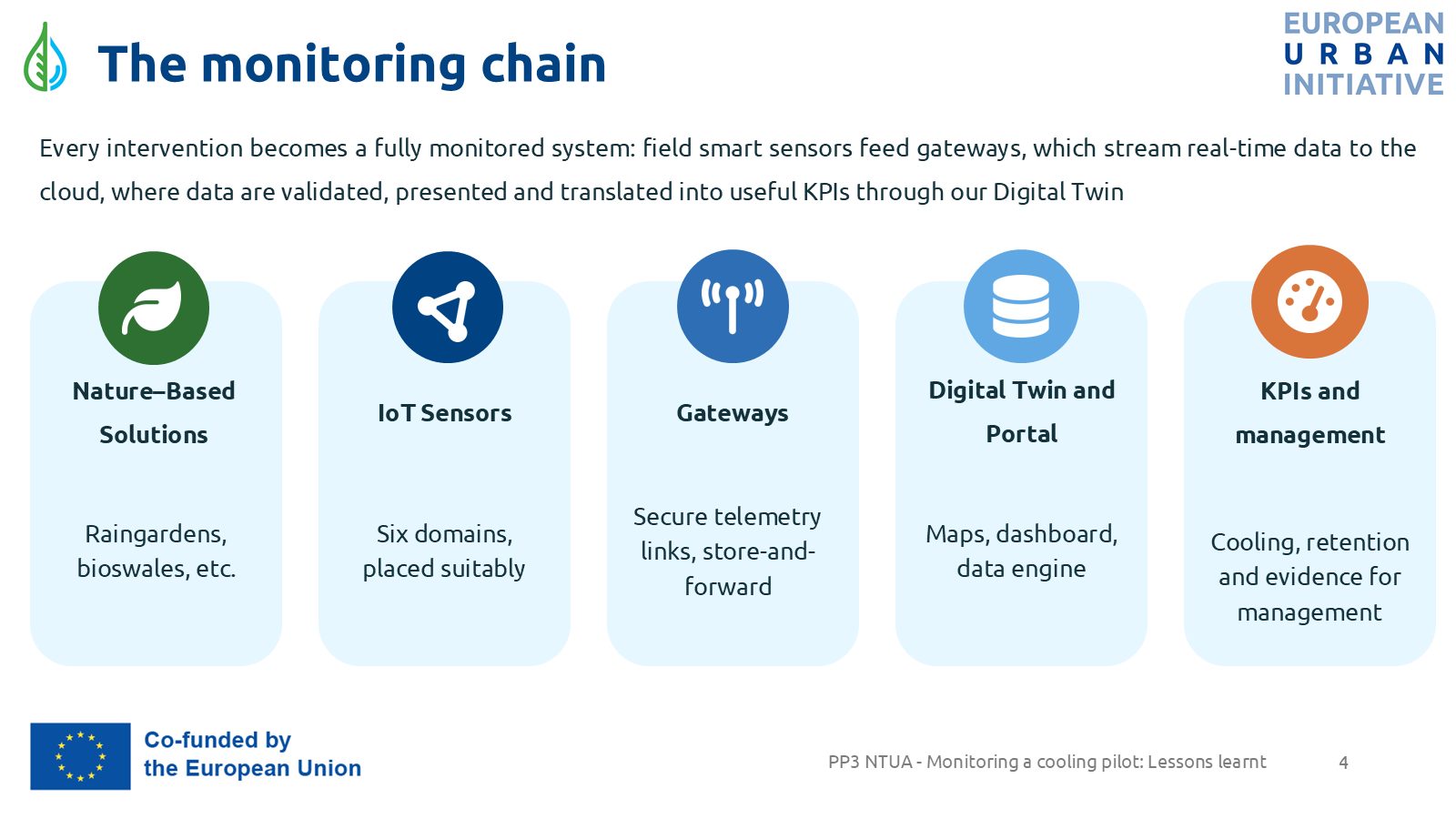
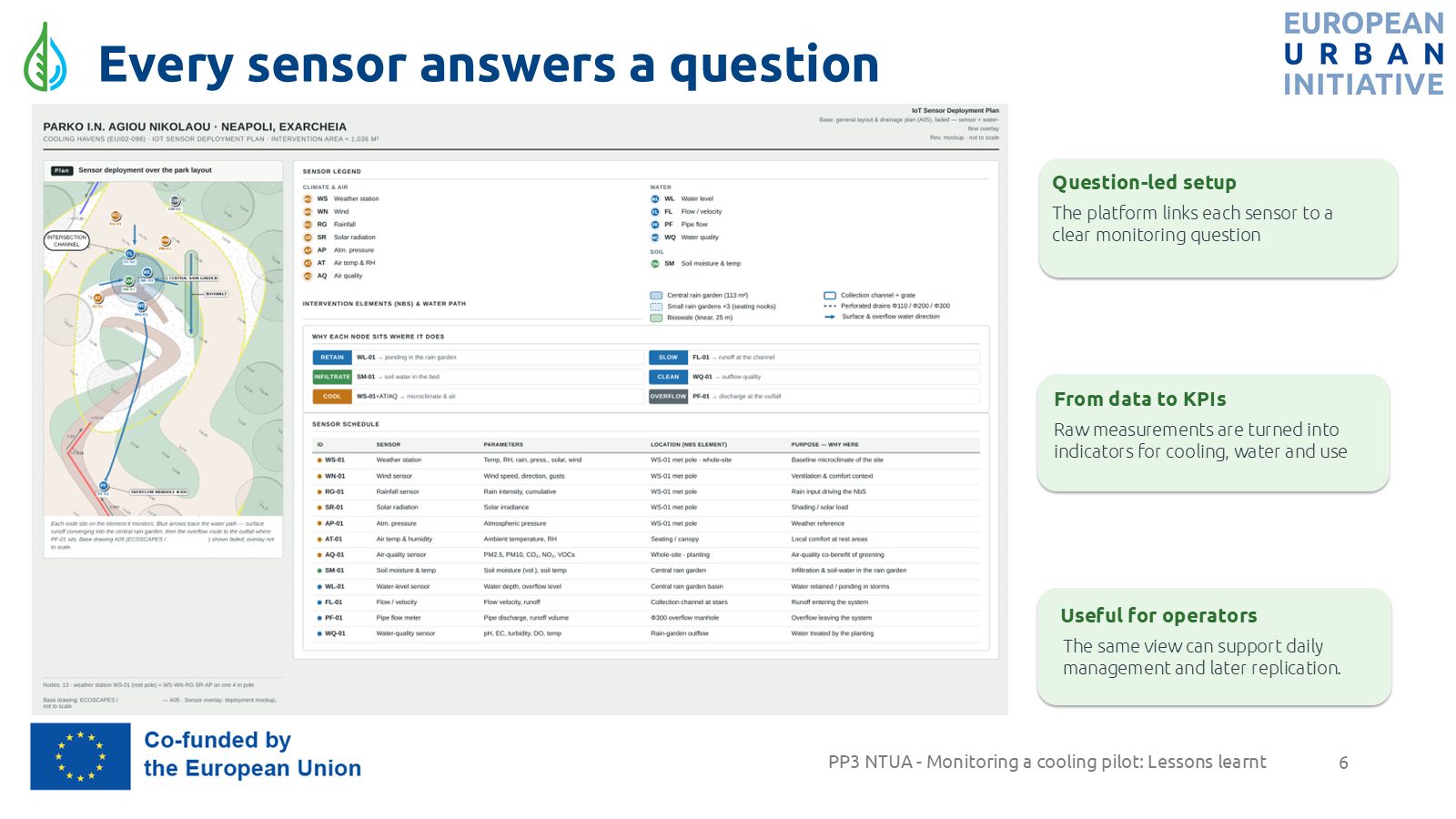
Here too, however, technical data alone are not enough. A temperature sensor can show by how many degrees the air temperature has changed at a given point, but it cannot say whether people find the place more pleasant. Usage data may show that more people are spending time in an area, but they do not automatically reveal why people chose it, how safe they feel there, or what they still miss.
This is where the work of the Living Lab and the Civic Lab meets again. One can show the environmental change; the other can help interpret its social meaning. Together, the two kinds of knowledge can tell us whether a better space has really been created.
In the World Café discussions in Budapest, the international partners drew attention to this same connection. On measurement and evaluation, alongside environmental data, the discussion also covered resident feedback, tracking maintenance costs, developing indicators and documenting the participatory process. The aim was not simply to have a dataset available at the end of the pilot, but to make it possible later to understand why a given intervention worked or did not work.
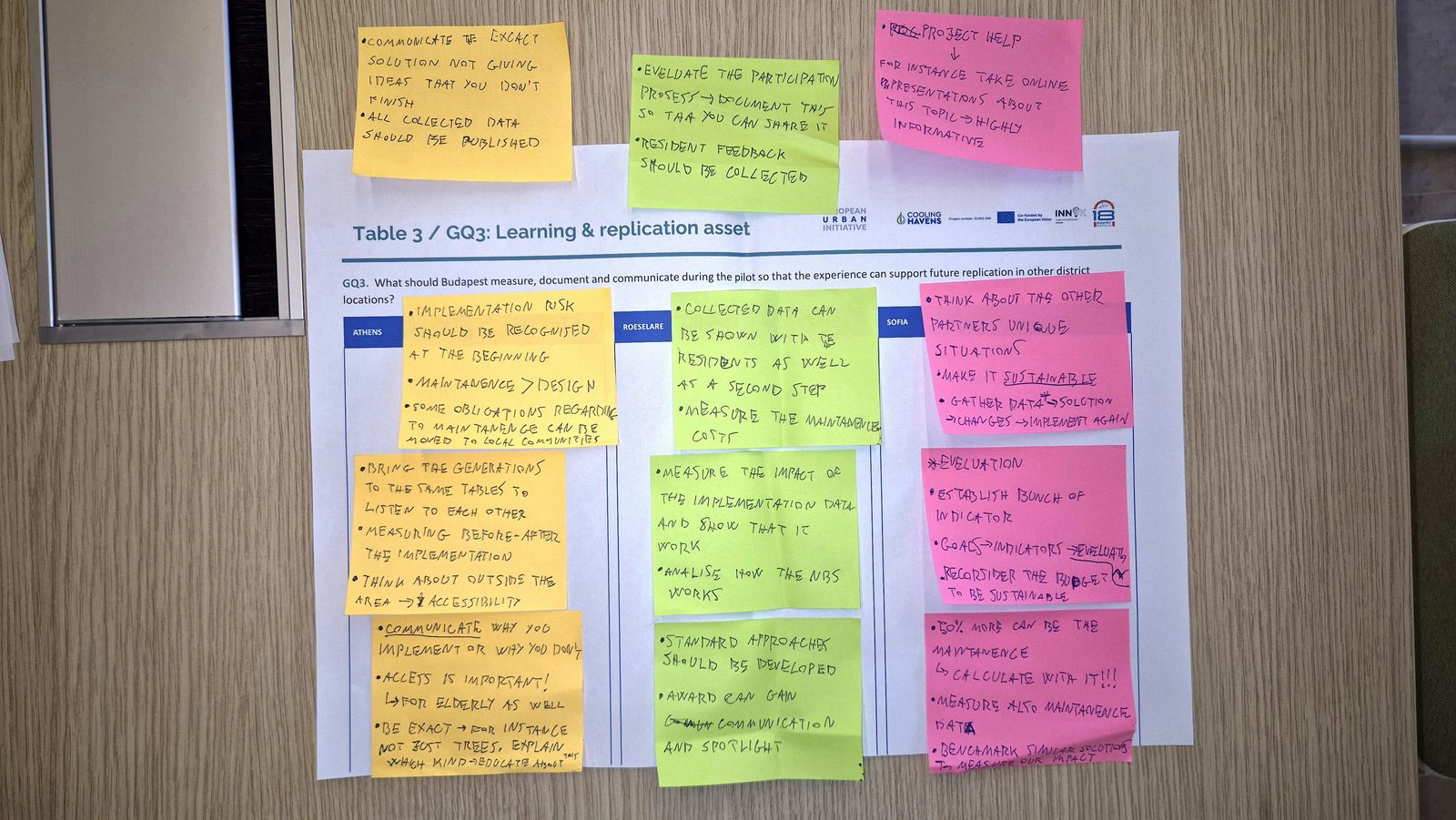
Social need, an experimental question and a measurement result still do not automatically mean that a solution can become urban development practice. The next step requires the perspective that Urban Lab represents.
An urban development cannot be delivered simply because it seems a good idea professionally. There are utilities on site, ownership and operating arrangements, permits may be needed, capital funding has to be available, and it must be known who will run the new system years after handover. In the Budapest professional work of Cooling Havens, feasibility is therefore not a late verification step but a consideration that runs through the entire development.
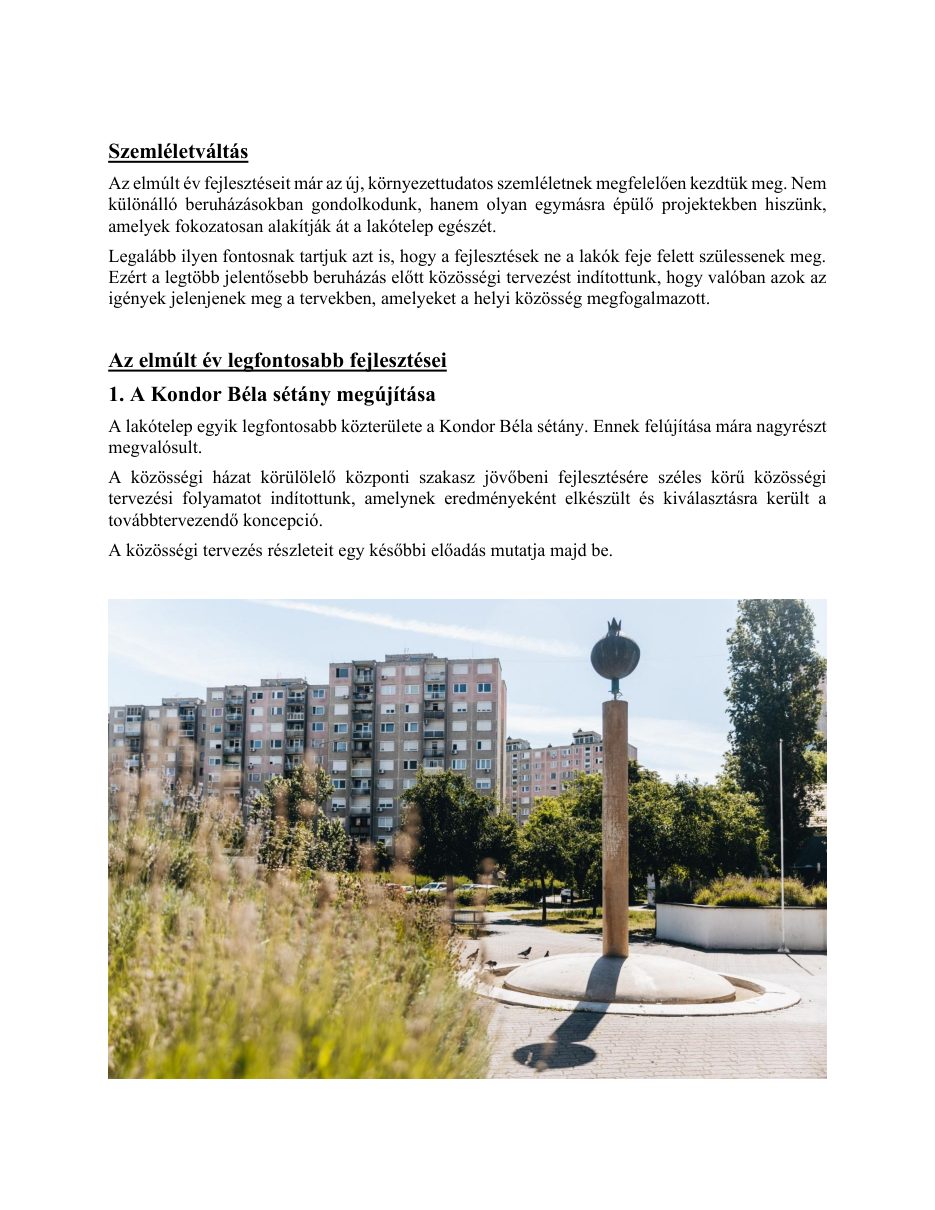
From this perspective, too, Havanna is not an isolated project. In recent years, a series of interlinked public-space and community developments has begun on the estate. The renewal of Kondor Béla sétány, the transformation of the market, the creation of community gardens, planning for the future of the pavilion row and preparations for the community space between Havanna utca 64–75 are all part of the same longer-term urban renewal process. The district's background document explicitly sets out the view that, rather than individual investments, it is worth thinking in terms of successive developments that gradually transform the estate.
Within this process, a small pilot can also become valuable from an urban development point of view. If, for example, a shading solution on the Havanna estate turns out to genuinely improve thermal comfort while being sustainable to operate, the experience can later be used in planning other sites in the district. If a new irrigation method needs less water while the condition of the planting improves, its significance goes beyond the park in question. And if user research shows that certain spatial design solutions really do encourage people to stay longer, this knowledge will not have to be rebuilt from scratch when the next public space is designed.
The relationship between the three labs is therefore not a linear division of labour. It is not that the Civic Lab finishes its task and hands the project over to the Living Lab, which later passes it on to Urban Lab. The process works much more as a continuous back-and-forth.
User experience can shape the pilot's question. The result of the experiment can raise a new social question. An urban development constraint can change the solution to be tested. And experience gained through use can feed back into the next design decision.
The workshops of the Budapest site visit demonstrated this way of working particularly well. When the partners discussed which interventions should be implemented first, questions of measurement and usability immediately came up as well. When they examined the risks of implementation, resident communication, maintenance and social acceptance came up alongside utilities and permits.
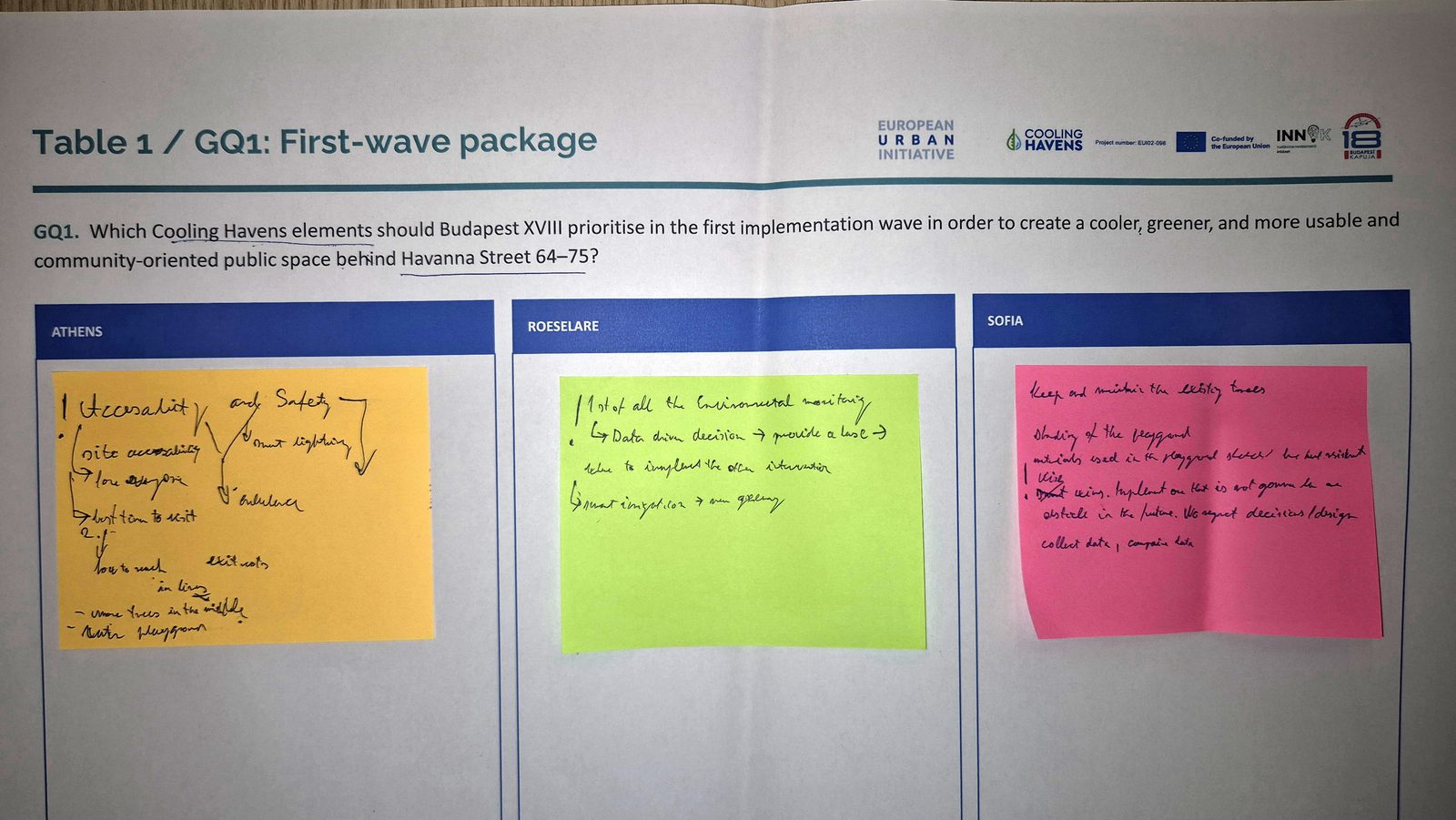
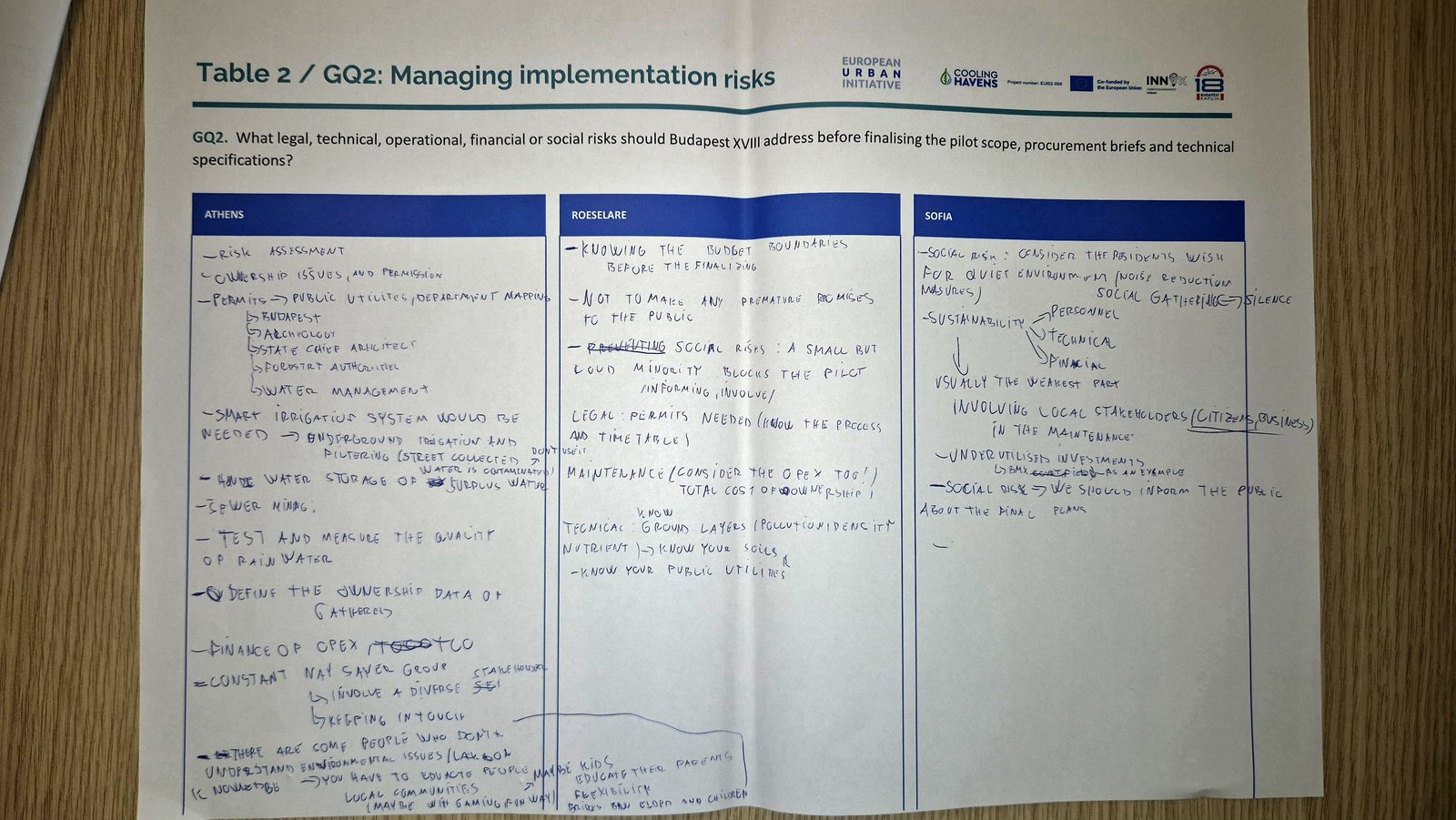
The success of a climate-adapted public space can therefore rarely be judged from a single professional perspective. A solution may be technically excellent while people do not use it. A new community function may be popular while there is no long-term capacity to maintain it. And an innovative pilot may be spectacular, yet later we may be unable to show what change it produced.
In Cooling Havens, the joint work of InnoK's three platforms tries to avoid precisely this fragmentation. Social experience does not appear as a separate chapter alongside the technical plan; it shapes it. Measurement is not raw material for a report prepared at the end of the project; it supports learning during the development. And urban development feasibility is not a constraint on innovation, but a condition for a good idea to remain workable in the long term.
Knowledge, then, does not arise in one lab or another.
The most important knowledge is created in the connections between them.
The Bókay Garden experience shows how diverse user feedback can become design priorities. The professional collaboration with Athens shows how a solution developed in another city can be turned into a local question. And the Havanna pilot offers the opportunity to shape this local question into an intervention that can be tested, and then to make what we learn measurable and open to evaluation.
So the circle closes, but at the same time it starts again.
Local experience becomes a development question. The development question becomes an experiment. The experiment produces evidence and new user experience. And the knowledge gained feeds back into the next urban development decision.
In the Workshop Journal on LivingLab.hu, we want to make this process easy to follow: not only the solutions that are eventually delivered, but also the thinking that leads to them. How a question changes as we work with our partners, which local considerations modify the first ideas, how measurement is prepared, what experience use will bring, and how all of this can become knowledge that can later be used in other developments.
From this point of view, Cooling Havens is more than a single climate adaptation project.
It is a shared workspace where social research, local experimentation and urban development meet.
And ultimately, the question is the same from all three perspectives.
How can an urban space be changed so that it is not simply new, but genuinely works better?
And how can this be not just assumed, but demonstrated through the experience of local people, the results of the experiment and the practice of urban development?
Image gallery
Related materials
Background materials to download
Would you like to work with us?
Research, methodological support and solutions tested in real-world settings – for local authorities, institutions and researchers.