Workshop Journal · Cooling Havens
What can we bring home from Athens? – applying Cooling Havens solutions locally
In urban climate adaptation, knowledge transfer rarely means simple copying. A solution that works in another city is no guarantee in itself that the same intervention will work properly in an environment with a different climate, a different structure and different social conditions. The Athens experience of the Cooling Havens project therefore reaches District XVIII of Budapest not as a ready-made plan, but as professional knowledge from which solutions suited to the local conditions of the Havanna housing estate have to be developed.
This is exactly what makes the project's Budapest task interesting. The aim is not to create a smaller copy of an Athens intervention in the area between Havanna utca 64 and 75. Rather, it is to understand which problems were answered in Athens and by what logic, and then to examine what of this can be used at the Budapest site. Adaptation is therefore not an add-on step of the project; it is the professional work itself.
One of the most important common features of the projects seen during the professional visits in Athens is that urban heat is not tackled with a single technological intervention. Vegetation, water, soil, shading, paving, the use of public space and measurement appear as an interconnected system. Heat is not an urban problem in itself. Heating paved surfaces, lack of shade, drying soil, water-stressed vegetation and the rapid drainage of rainwater together shape the microclimate that users of public spaces experience in the summer months.
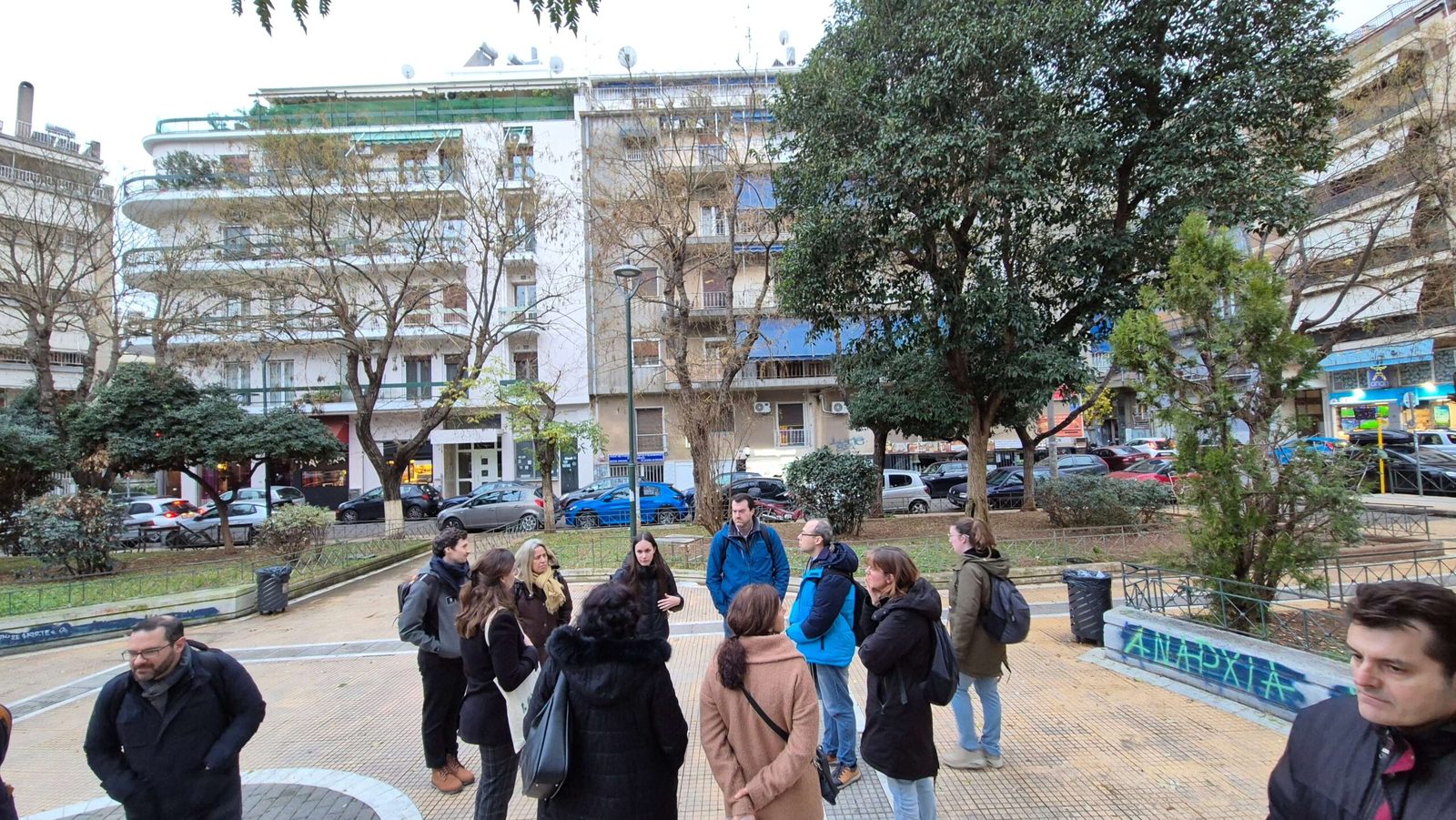
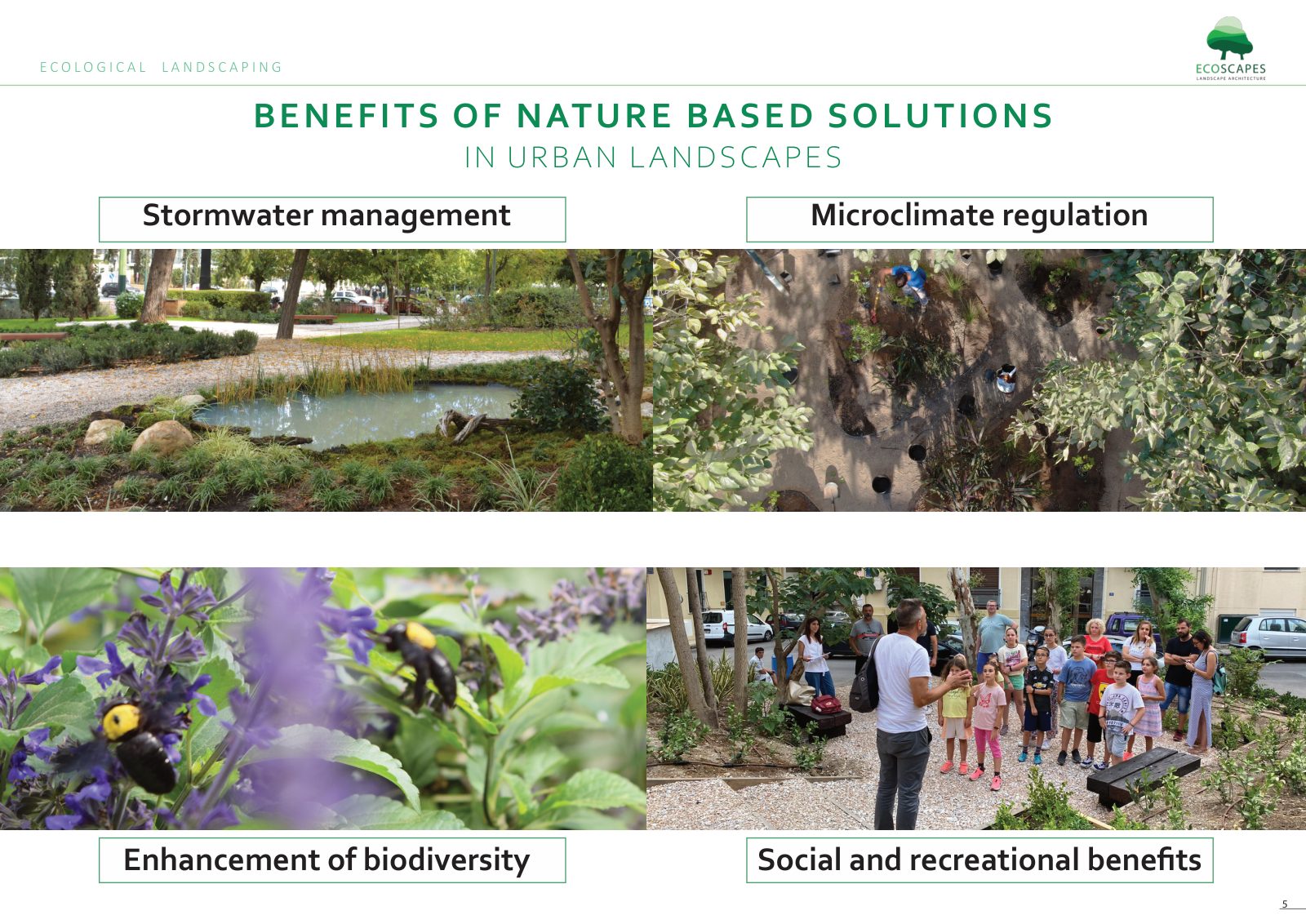
The nature-based solutions presented in Athens therefore did not appear as isolated landscaping elements. Rain gardens, vegetated drainage strips, permeable paving, water-retention areas, tree planting and more diverse planting are all parts of the same urban ecological system. Such an intervention can simultaneously influence the movement of rainwater, the microclimate, biodiversity and the way people use the space.
In the Athens experience of Cooling Havens, a park is therefore not just a green area. A well-designed public space can also be water-management infrastructure, a microclimatic system that influences temperature, an ecological habitat and a social meeting place. This way of thinking is particularly relevant for Havanna, because several needs meet at the planned pilot site. The area is at once a passageway, a place to rest, a place for sport and a potential community space, while summer heat stress, limited shade and the condition of the green areas also affect how usable it is.
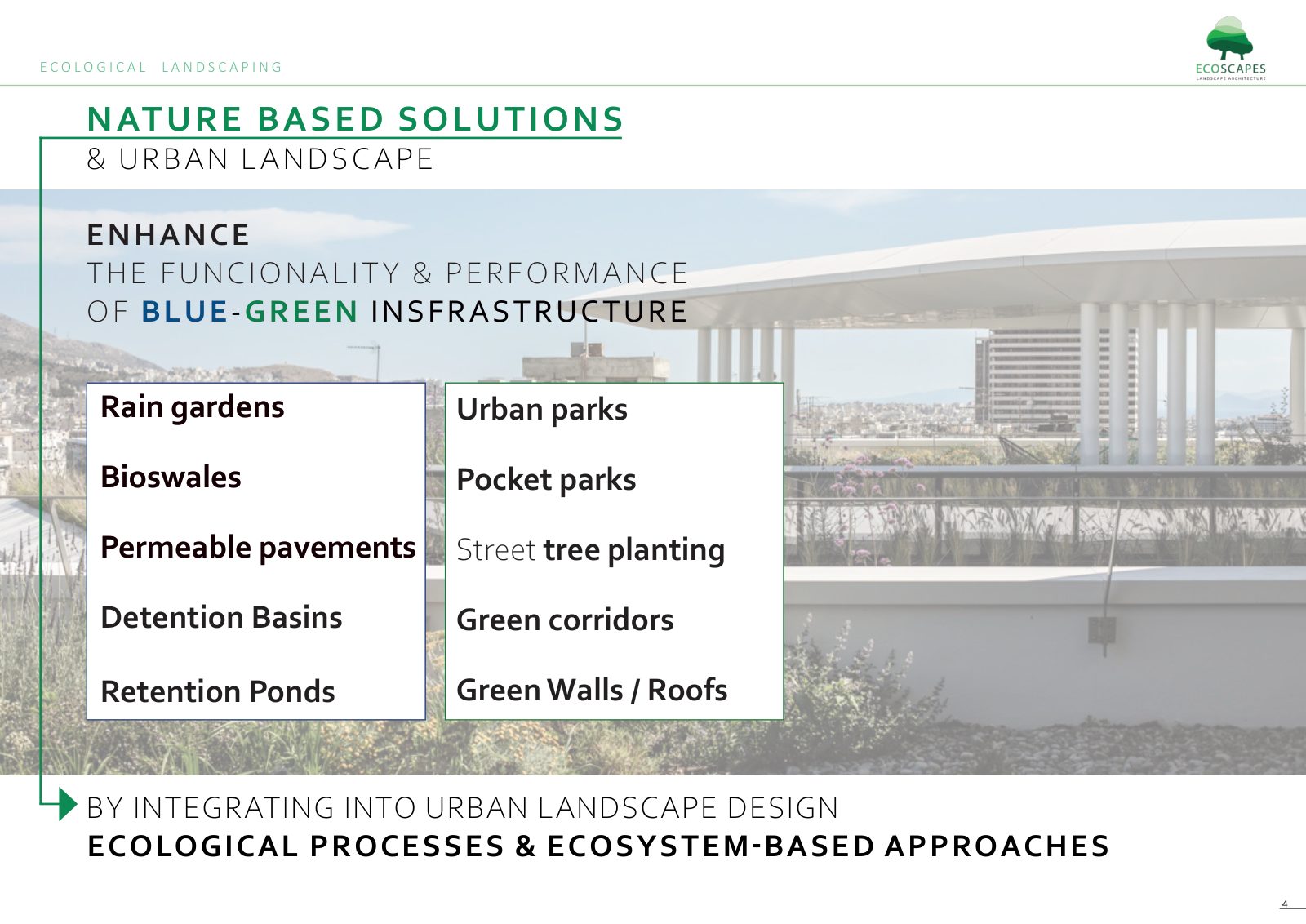
One of the most important shifts in thinking in the Athens examples concerns water. For a long time, the aim of conventional urban drainage was to get rainwater off public spaces as quickly as possible. Climate adaptation, however, increasingly asks how falling water can be slowed down, retained and infiltrated on site, and later made available to vegetation.
In Athens, one clearly visible tool for this is the rain garden. In the design for the Agios Nikolaos area, rainwater arriving from the surrounding surfaces currently causes erosion, so the planned system directs part of the water towards lower, vegetated areas. Here the water can be held temporarily, infiltrated and, in heavier rainfall, passed on in a controlled way. The point, however, is not the rain garden as a form, but the deliberate shaping of the water's path.
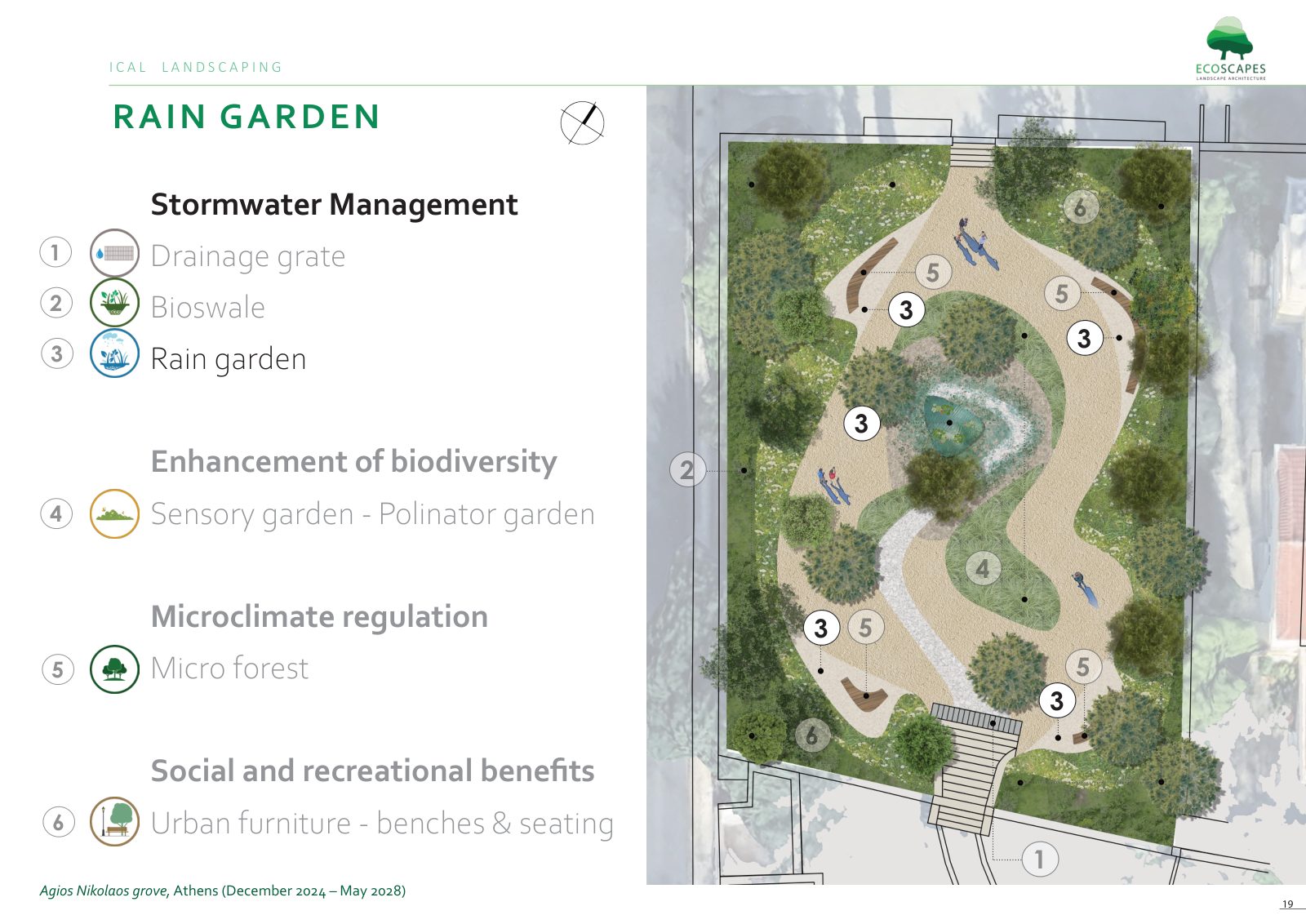
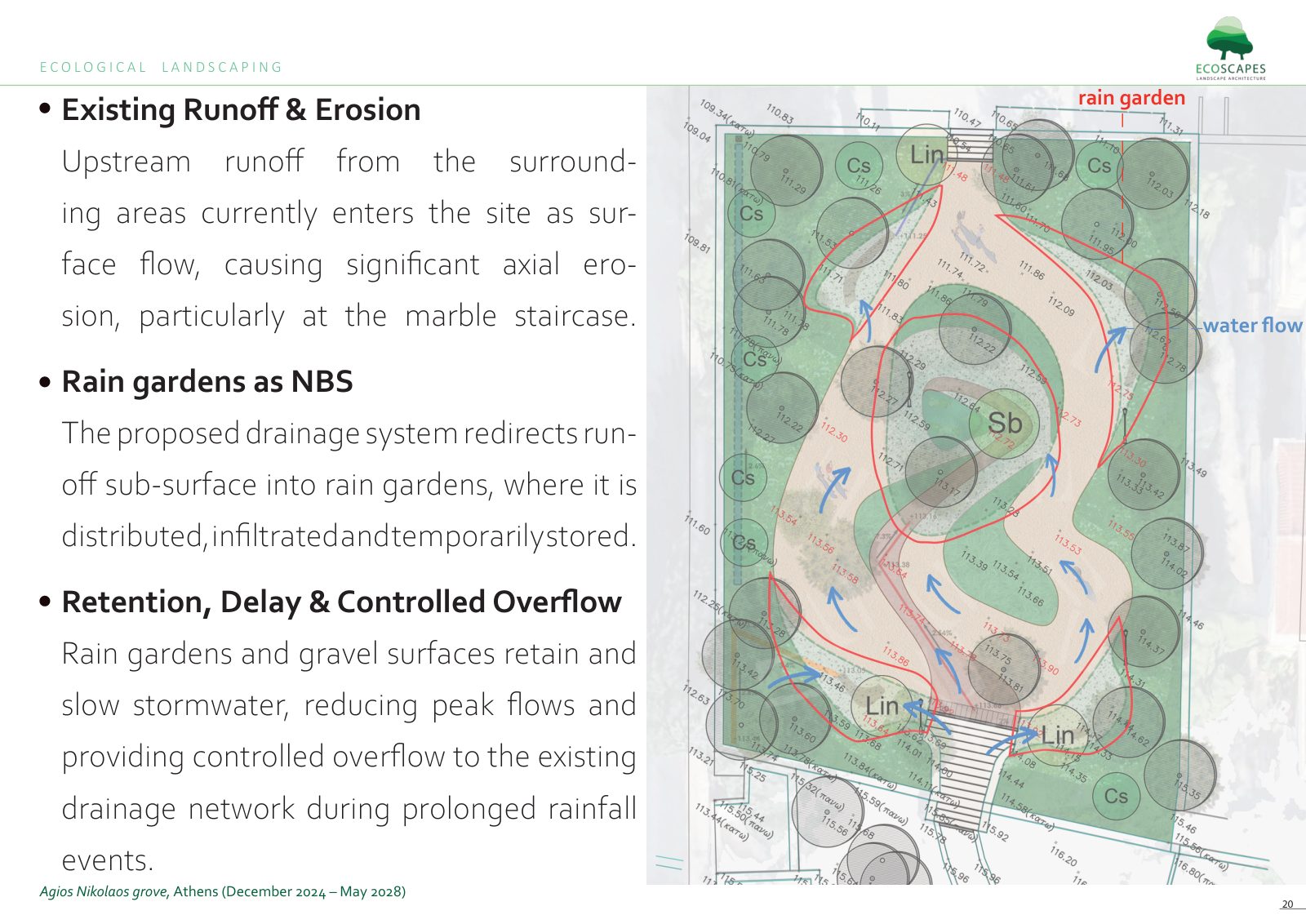
For Havanna, this does not mean that the same kind of rain garden has to be built. First, the water balance of the Budapest site has to be understood: where the rainwater comes from, where it flows, where it can infiltrate, what the soil is like, which utilities lie below the surface, and at which points keeping water on site could bring a real benefit. The Athens example does not give a ready answer; it makes more precise questions possible.
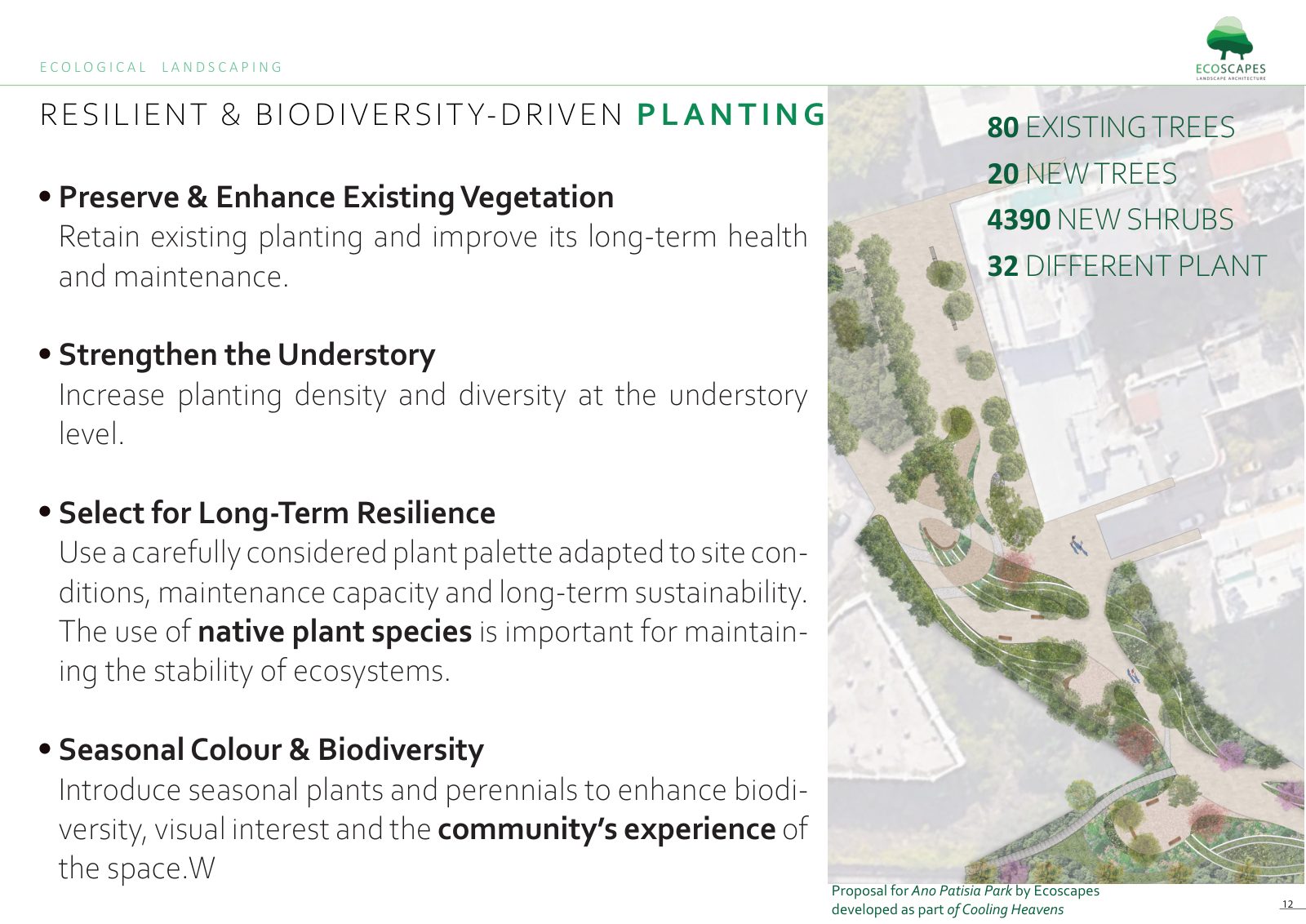
The same applies to vegetation. The Athens professional materials consistently stress that climate adaptation does not simply mean planting more. Keeping valuable existing vegetation, improving soil condition, creating more varied planting layers and choosing species that can be sustained in the long term are all part of the design. Plants do not need to look good on the day of handover; years later they still have to form a working, shade-giving and ecologically valuable system.
This is particularly important for Havanna. At the Budapest site, vegetation has to cope with colder winters as well as summer heat. The soil may differ, as may the annual distribution of rainfall and the maintenance capacity available in the long term. This is exactly why the species used in Athens cannot be copied automatically. What can be adopted is the approach that considers plant choice together with the local climate, water demand, soil and sustainable operation.
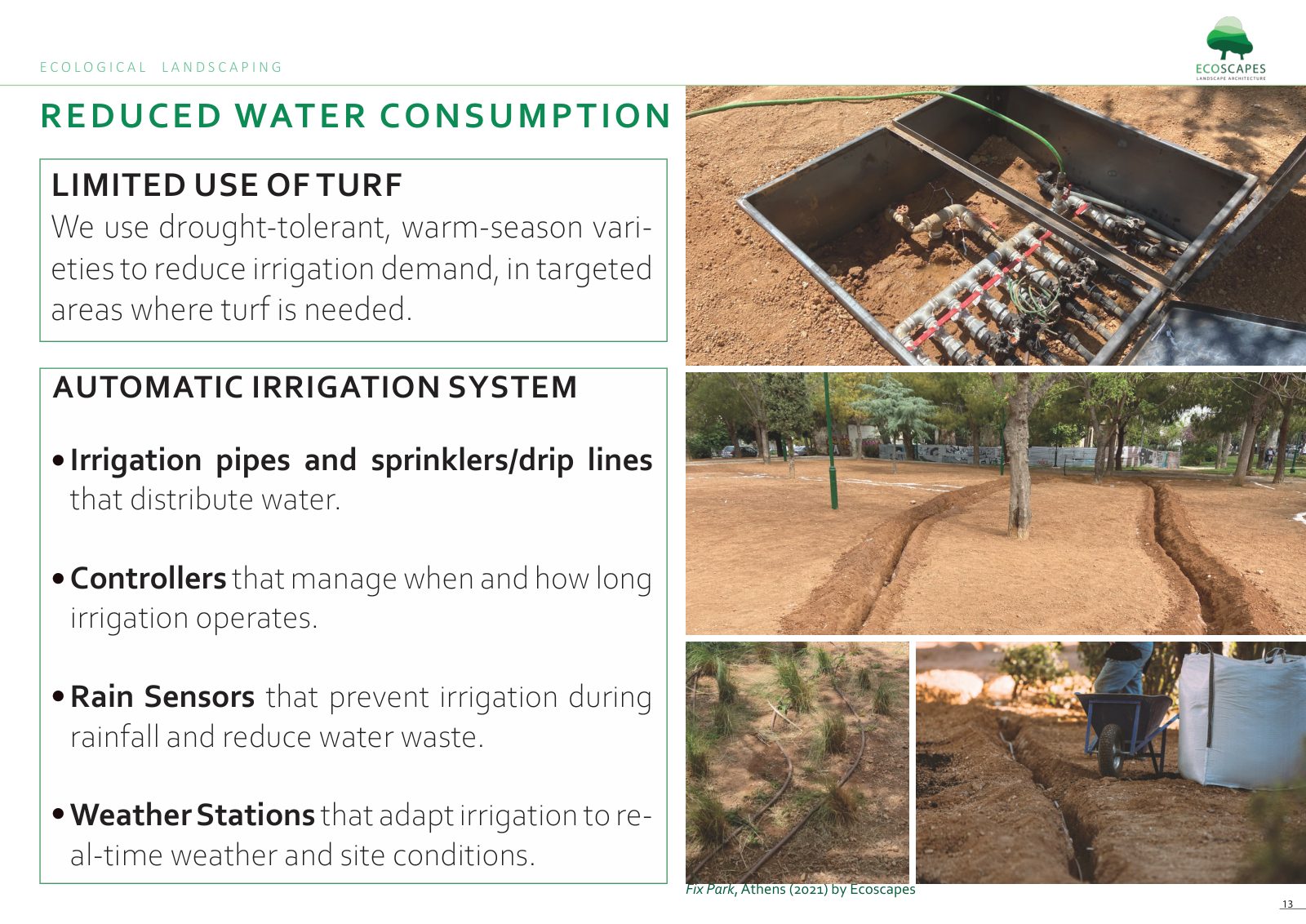
The Athens experience also puts irrigation in a different light. An automatic system does not necessarily mean more economical water use in itself. A system becomes truly smart when its operation is driven by the condition of the plants, soil moisture and the current weather. With rain sensors, weather data and appropriate control, the system can be kept from using water when it is not needed.
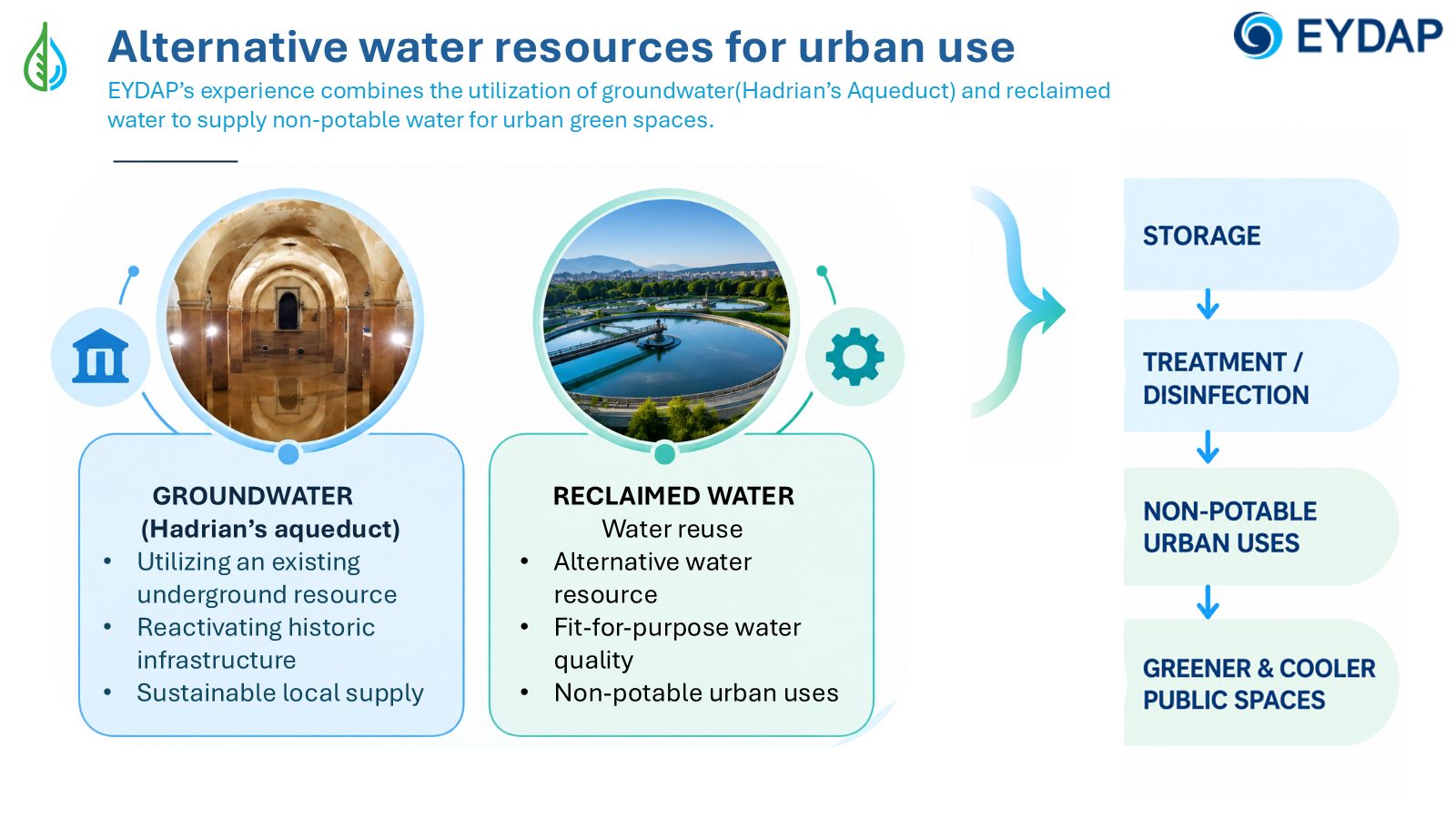
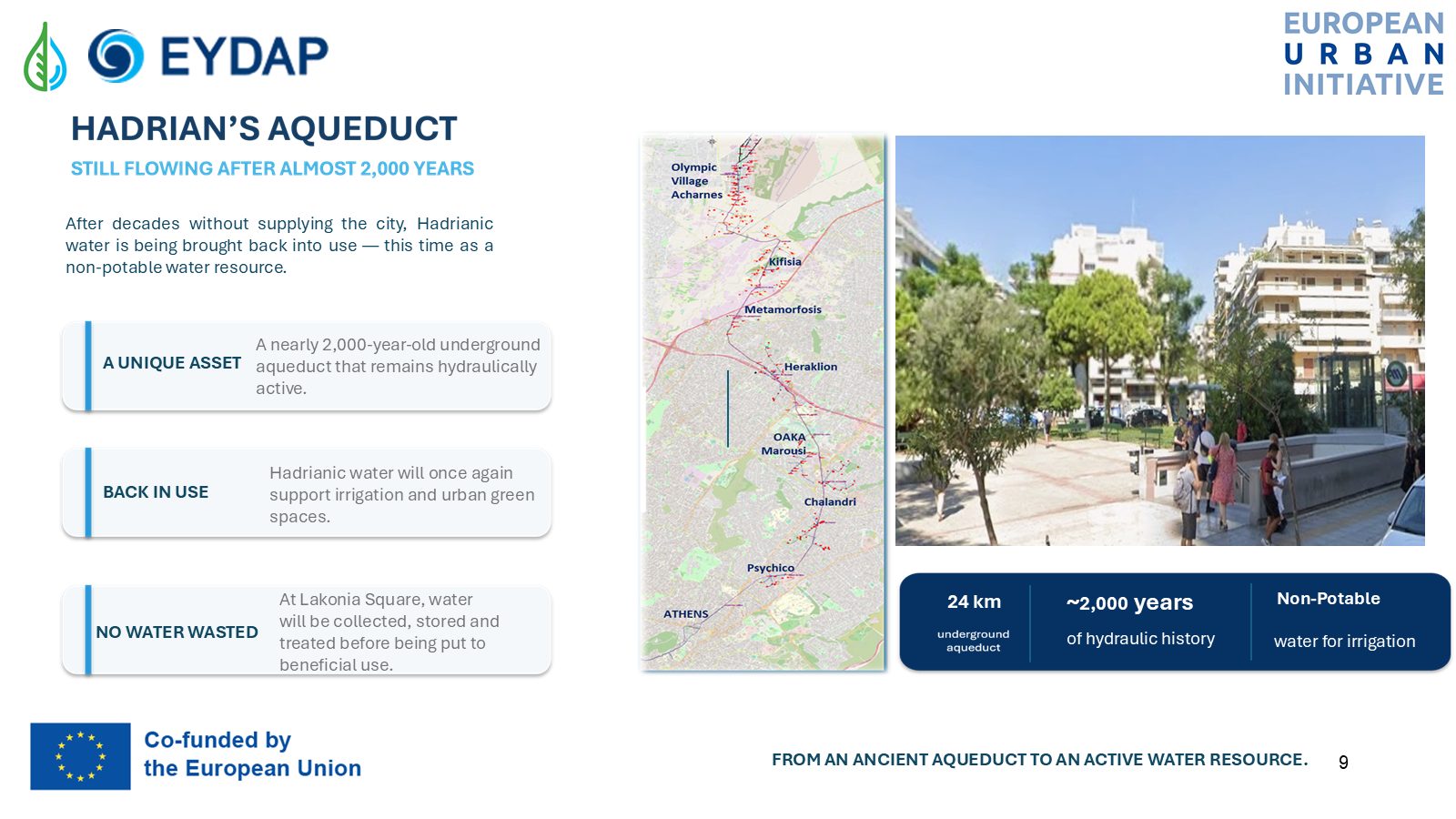
This is also where the question of local water sources connects to the Athens experience. The Athens water utility also works with sources of non-drinking quality that, after appropriate treatment, can be used to irrigate urban green spaces. The most remarkable example is Hadrian's Aqueduct, almost two-thousand-year-old infrastructure that still carries water underground today.
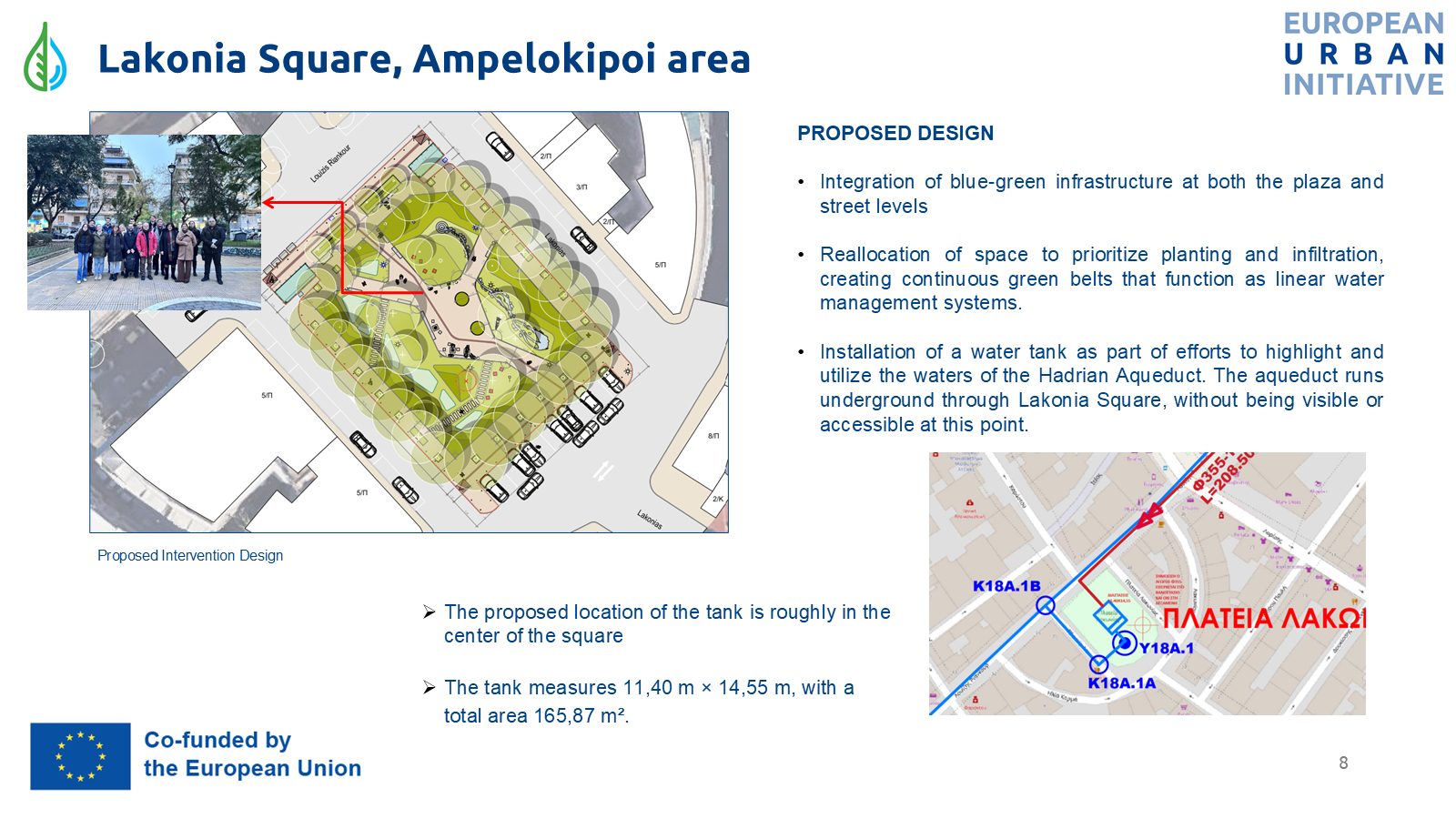
Around Lakonia Square, the planned intervention treats this water not as drinking water but as an urban resource. The system links the collection, storage, treatment and use of the water for green spaces with the redesign of the square.
Yet this is precisely what shows why adaptation is not copying. There is no Hadrian's Aqueduct under Havanna. The Budapest question is therefore not how to build the same system. The real question is whether there is a local water source that is not used today but, under appropriate technical, legal and public-health conditions, could be suitable for purposes that do not require drinking water.
Examining possible alternative water sources is therefore a professionally interesting direction, but at present it cannot be regarded as a decided intervention for Havanna. Water quality, accessibility, storage, health requirements, permitting and operation are all questions that have to be clarified before a concrete decision.
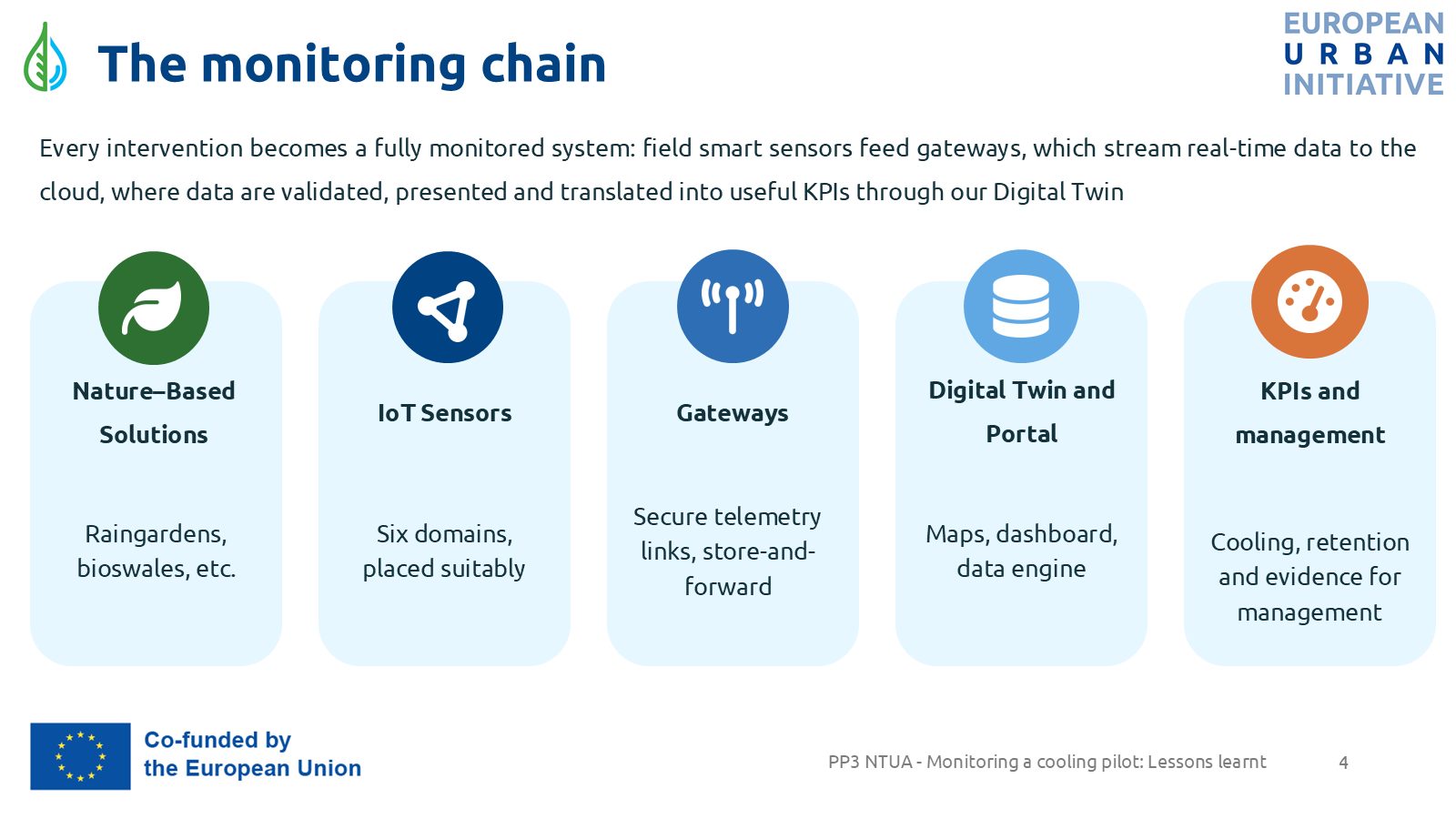
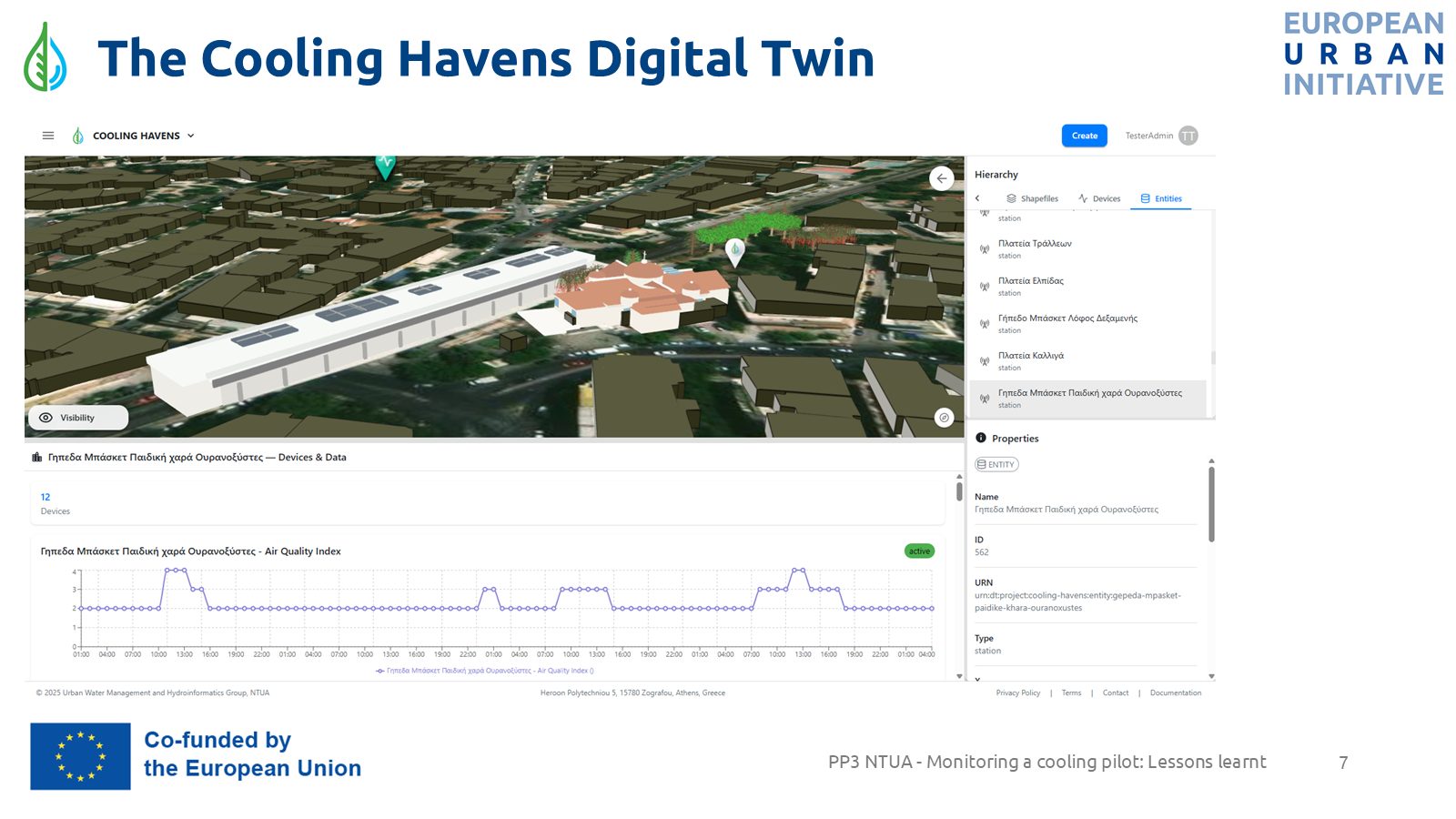
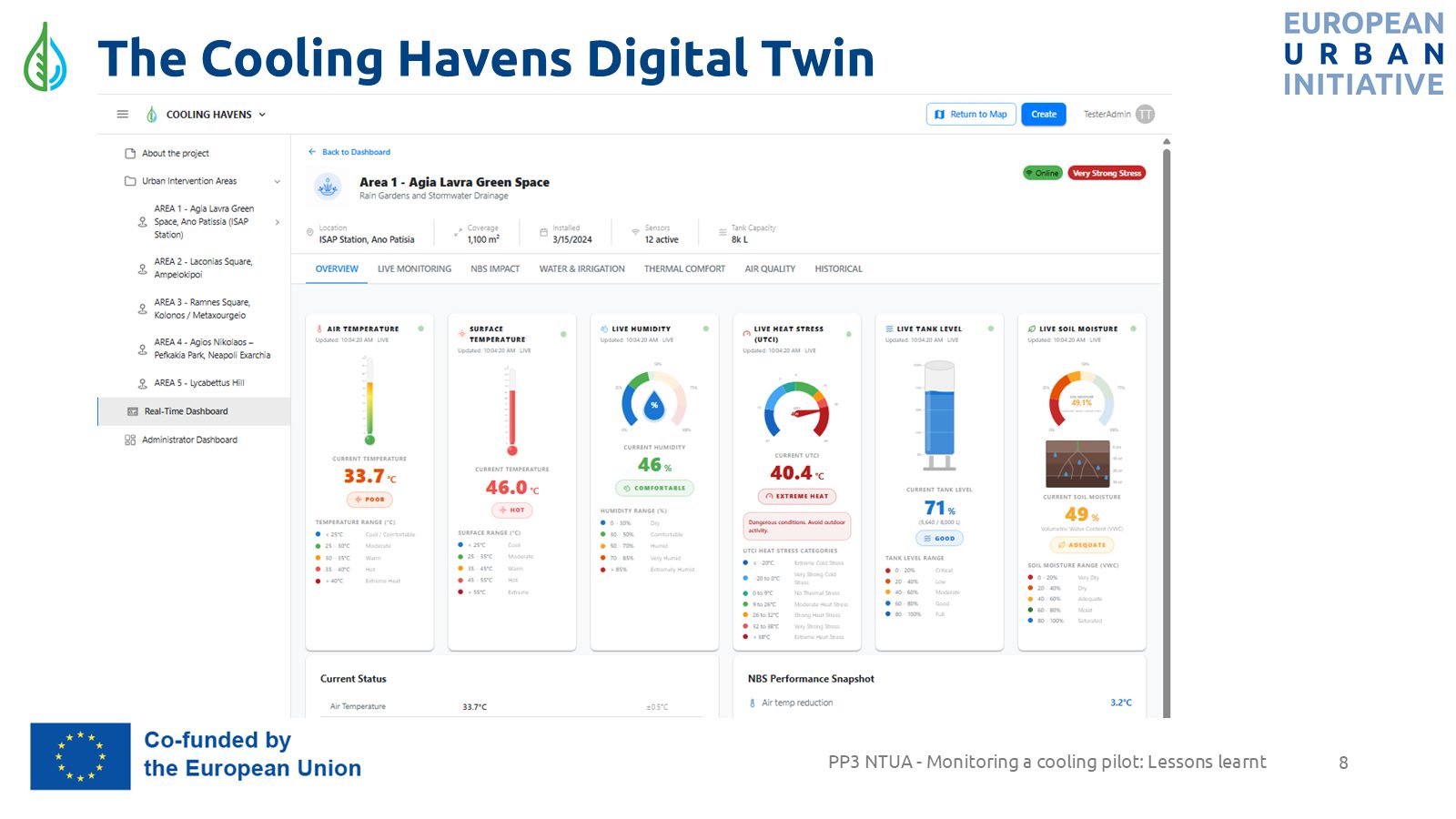
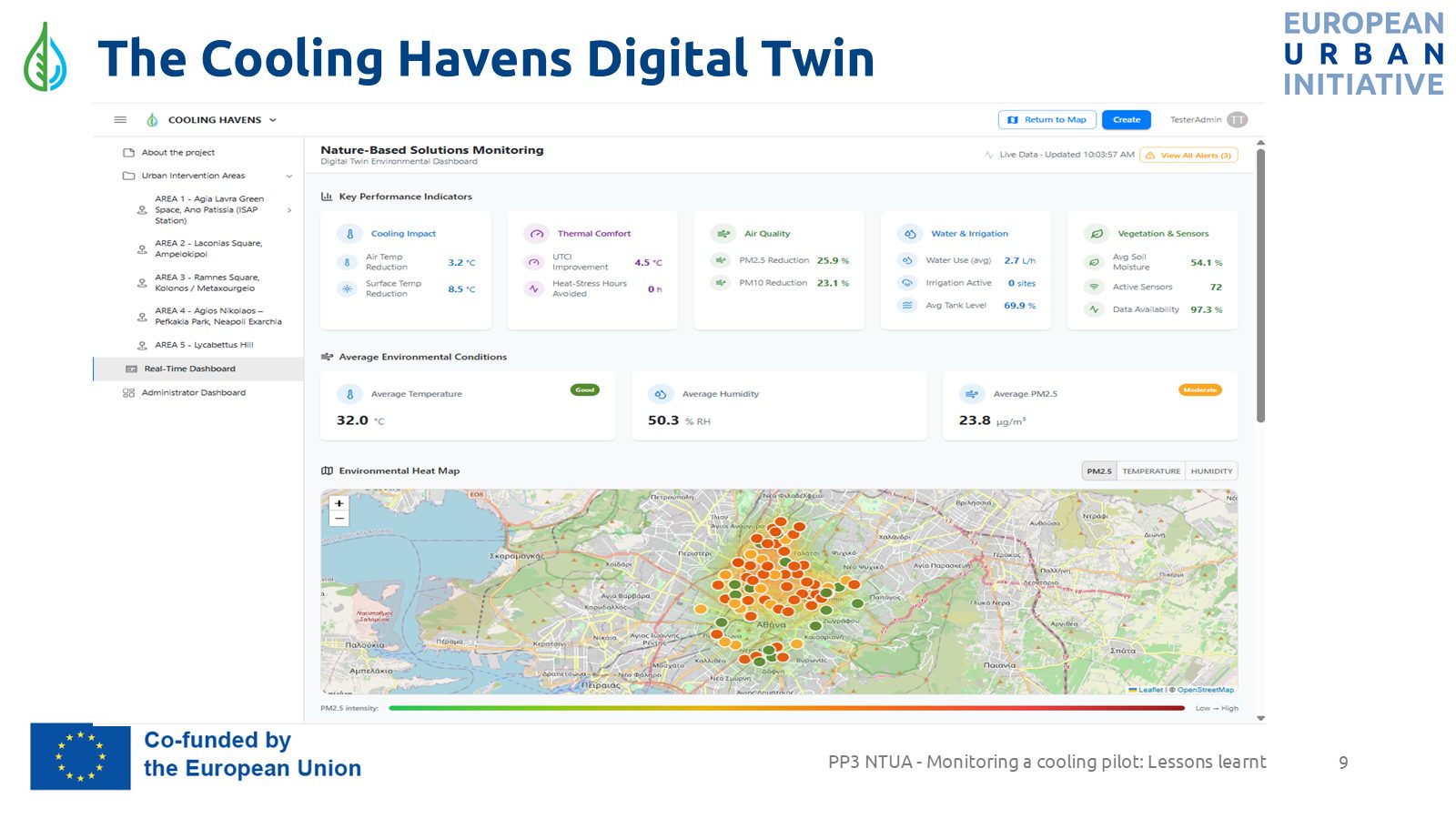
The other defining area of the Athens experience is measurement. In the Athens system of Cooling Havens, the nature-based interventions are linked to sensors, digital data processing and a Digital Twin environment. The aim is not simply to collect as much data as possible. It is rather to be able to establish, with the help of measurements, whether an intervention really achieved the effect assumed during design.
Microclimate, soil moisture, the movement of water, air quality and the use of public space can all be measured. These data only have real value, however, if the measurement is linked to a question formulated in advance. A sensor is not useful in itself. It becomes useful when it helps decide, for example, whether a shaded seating area has become cooler, whether the vegetation is adequately supplied with water, when irrigation is needed, or which areas people use more intensively.
For Havanna, this means that designing the measurement system does not start with choosing sensors. First, it has to be defined which decisions we want to make later on the basis of the data. Only then can it be decided which data are worth collecting, where and how often.
The Athens monitoring experience also highlights that documenting the baseline must not be left until after implementation. If we do not know what the temperature, use or soil moisture of the area was before the intervention, it is much harder to prove later what change the project brought about. The proper placement, protection, calibration and maintenance of sensors are just as important. Measurement is therefore a design and operation task in its own right.
In this system, the Digital Twin is not a stand-alone technological showpiece. Its significance lies in bringing together, in a single decision environment, spatial information, time-series sensor data and indicators that operators can also interpret. This makes it possible, for example, to compare different shading situations, follow the water needs of vegetation, or later examine whether the result of a pilot justifies applying the solution on a larger scale.
Knowledge transfer from Athens, however, is not only about technical questions. One of the project's strongest lessons is its community engagement methodology.
In Athens, how people actually use a given area was studied both before and during design. People were not only asked what kind of development they would like; it was also observed where they walk, where they sit down, which places they avoid, where water remains after rain, and how different user groups share the same area.
This experience is particularly relevant for Havanna, because local community planning no longer starts from scratch. The earlier process outlined a development direction that includes sport, rest, smaller play and community functions. The next participatory phase is therefore no longer about what kind of park people would like, but about how the direction already set can be refined from a climate-adaptation perspective.
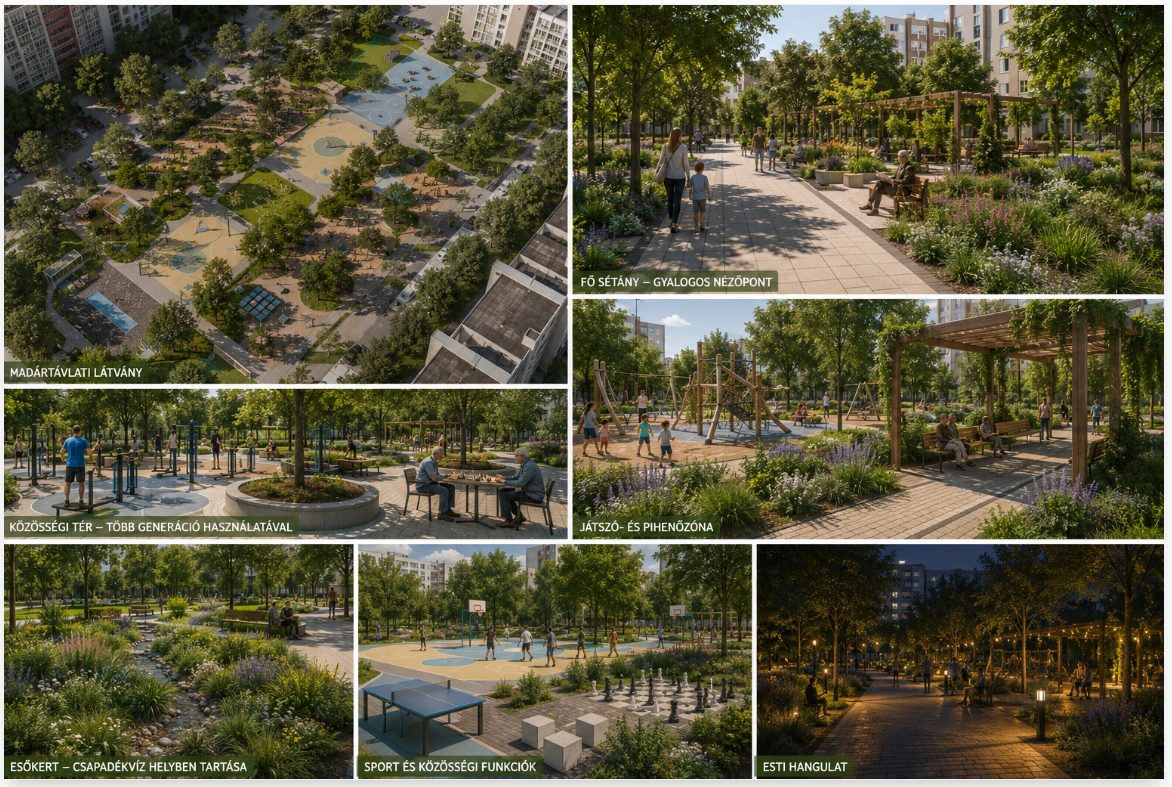
In this phase, residents' knowledge can relate to very concrete questions. Where would shade be needed along everyday routes? Where do people sit down, and which places do they avoid? Where does water remain after rain? What do they value in the existing environment, and what do they experience as an obstacle?
These questions do not repeat a general consultation about the park; they make the development direction already set more precise from a climate-adaptation perspective.
The Athens example is therefore useful for Havanna not as a ready-made solution, but as a method. It starts from the problem, observes actual use, tests the solution and measures the result.
The next step is to collect the local questions, decide which Athens elements can be adapted and which cannot, and define in advance which measurements will confirm the result.
Related materials
Background materials to download
Would you like to work with us?
Research, methodological support and solutions tested in real-world settings – for local authorities, institutions and researchers.